



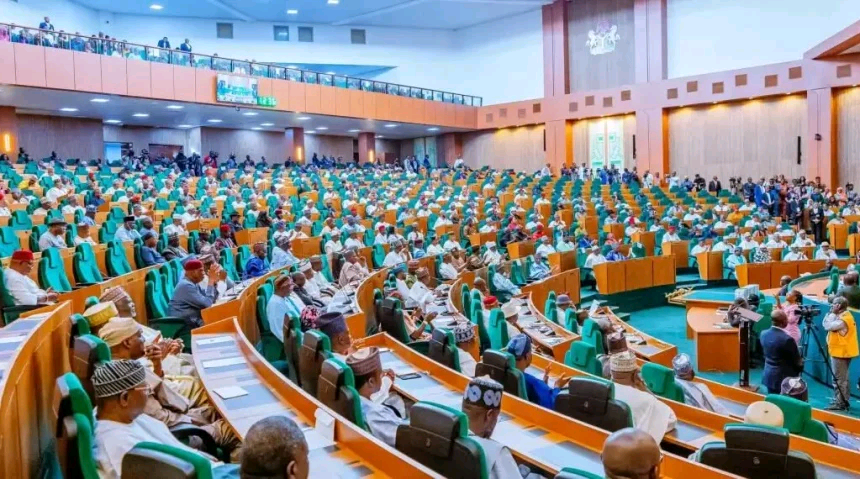

The House of Representatives on Thursday passed a bill through second reading seeking to establish the National Authority for Renewable Energy (NARE) as the principal institution responsible for regulating, coordinating and promoting renewable energy development and utilisation in Nigeria.
The bill, sponsored by the Chairman of the House Committee on Renewable Energy, Hon. Victor Ogene, seeks to amend the Electricity Act through the Electricity Act (Amendment) Bill, 2025, to establish a dedicated institutional framework for the country’s renewable energy sector.
The private member’s bill received support from lawmakers during a debate on its general principles, despite opposition from some members, including the Chairman of the House Committee on Power, Hon. Victor Nwokolo, who objected to the proposed transfer of renewable energy regulatory functions from the Nigerian Electricity Regulatory Commission (NERC).
Under the proposed legislation, the functions and powers of NERC, the Rural Electrification Agency (REA) and the Rural Electrification Fund (REF) relating to renewable energy would be transferred to the proposed National Authority for Renewable Energy.
The Anambra lawmaker argued that establishing a specialised authority would address fundamental challenges in the electricity sector, strengthen institutional capacity and provide a coordinated approach to renewable energy development across the country.
According to the proposal, the new authority would promote mini-grid and off-grid renewable energy systems to expand electricity access in remote, unserved and underserved communities, particularly those with limited access to the national grid.
The legislation also seeks to encourage investment and employment through incentives, local production, research, technological development and capacity-building, with the aim of strengthening domestic expertise and expanding opportunities in the renewable energy industry.
On energy diversification, the bill provides for the development and utilisation of multiple renewable energy sources, including solar, wind, hydro, geothermal and biomass, to broaden Nigeria’s energy mix and reduce dependence on conventional electricity generation sources.
The proposed authority would also be empowered to promote consumer protection through fairer tariffs, licensing requirements, operational standards, compliance monitoring and dispute resolution mechanisms aimed at improving accountability in the renewable energy market.
To support its operations, the bill proposes the establishment of a governing board, collaboration with existing institutions and the allocation of 40 per cent of the funds available to the Rural Electrification Fund as a source of financing for the new authority.
Ogene expressed optimism that the proposed institution would complement existing agencies, operate more efficiently and deliver tangible benefits to Nigerians through improved electricity access and the expansion of renewable energy infrastructure.
He maintained that the legislation presented an opportunity to strengthen institutional capacity, attract investment, encourage technological innovation and support economic development through the wider adoption of renewable energy solutions.
The bill also seeks to address the administrative implications of establishing the authority by providing for the transfer of relevant personnel, records, assets, liabilities and ongoing projects from the affected institutions to ensure continuity and prevent disruptions to existing renewable energy programmes.
However, the proposal faced criticism from some lawmakers, particularly Nwokolo, who opposed the proposed transfer of NERC’s regulatory functions and raised concerns about restructuring responsibilities currently vested in the electricity regulator.
Despite the objections, the House passed the bill through second reading, paving the way for further legislative consideration of the proposed authority and its implications for renewable energy regulation, rural electrification and electricity access in Nigeria.
