



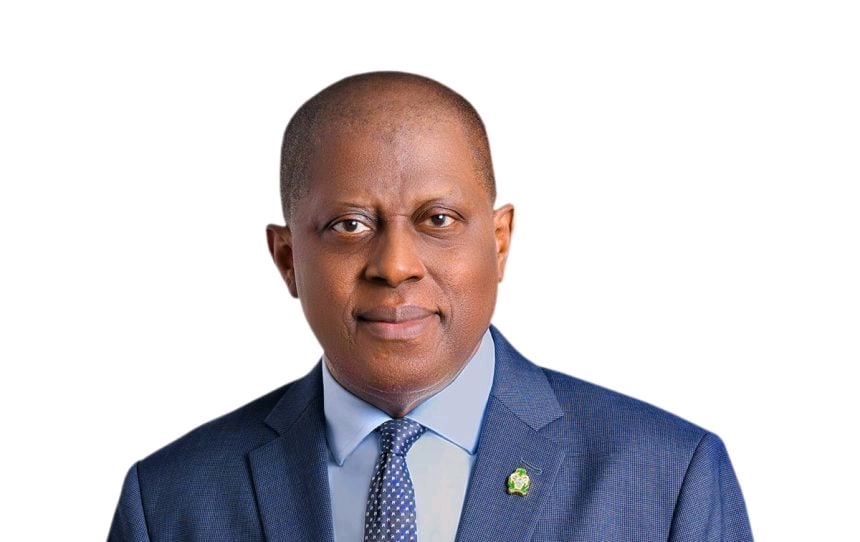

•Why last MPC decision took market by surprise — CBN Governor
CENTRAL Bank of Nigeria (CBN) Governor, Olayemi Cardoso and the governors of Banque de France and the Swiss National Bank have offered insights into how central banks assess economic conditions, weigh competing risks and determine monetary policy decisions, highlighting the considerations that shape interest rate moves and efforts to maintain price and financial stability.
Speaking in a panel session at the ongoing World Bank/IMF meetings in Bangkok, Thailand, Cardoso explained that Nigeria was transitioning from a currency crisis and a badly weakened economy when a new administration faced a crisis of confidence among investors.
“It was critically important that whatever it is we do to restore confidence has got to be one that endures and is impactful,” he said. Fundamental to that effort was ensuring the Monetary Policy Committee (MPC) included strong, well-recognised, independent-minded external members so that the risk of groupthink was significantly reduced.
These external members, Cardoso noted, brought perspectives different from those of internal staff and the two board members who also sit on the MPC. “There’s a tendency at times for the internals to perhaps hold on to data practices that they see every day,” he observed. “They come from the outside… and they bring a perspective that is perhaps not one that aligns necessarily with what the internals are doing. So the rigor of debate tends to be a lot stronger.”
He stressed that he never pre-concludes MPC outcomes with internal members. All data is shared in advance; members can interrogate the strong secretariat, run scenario analyses, and only then does the real deliberation begin. Resources are attached to each external member, and the CBN is open to them engaging outside specialists.
Regular retreats and multi-stakeholder engagements keep external members fully informed from the start, especially as Nigeria moves toward inflation targeting with IMF support.
Martin Schlegel, Chairman of the Governing Board of the Swiss National Bank, emphasised the central role of staff. “The staff typically knows more than we do,” he said. Board members must rely on staff analysis while fostering a culture of constant challenge to models and forecasts.
At the relatively small SNB, open discussion between board and staff is actively encouraged, and Schlegel models the willingness to change one’s mind in front of colleagues.
Emmanuel Moulin, Governor of the Banque de France, described the European Central Bank’s structured process: National Central Banks prepare bottom-up forecasts that undergo peer review before aggregation.
Meetings span two days—one reviewing data and markets without discussing policy, the next examining the chief economist’s policy options and communication. Individual national governors then explain the consensus and the texture of debate to their domestic audiences, stressing data-dependence and flexibility rather than forward guidance, he reiterated.
Dwelling on the topic: “How Central Banks Decide—Committee Decision-Making and Communication in an Era of Uncertainty,” Cardoso highlighted the chair’s responsibility to steer discussion productively.
He first identifies points of agreement, then disagreements, before voting. In the last MPC meeting, members quickly agreed the monetary transmission mechanism was faulty; that consensus simplified the subsequent debate on how to fix it. He also reminded colleagues that Nigeria’s inflation cycle differed from much of the world because foreign-exchange harmonisation and subsidy removal occurred later in the global cycle.
In a move that surprised market watchers, the CBN cut the benchmark interest rate to 23 per cent in September after two consecutive holds at 26.5 per cent. Cardoso said the decision rested on solid foundations already laid: an MOU improving fiscal-monetary coordination, clearer overnight financing rates, external reserves at an 18-year high, consistently falling inflation, and reasonable growth. Post-meeting dialogue with the press carefully explained the context. “Markets as we know generally don’t like surprises,” he acknowledged, yet absorption was smooth because participants recognised the transmission problem and trusted the CBN’s track record of credible action.
The panel underscored that sound committee processes, independent voices, expert staff input and careful communication remain essential to building and preserving the credibility of monetary policy.
