




The United Nations Children’s Fund (UNICEF) has reaffirmed its partnership with the Osun State Government to tackle the rising number of out-of-school children using digital learning, artificial intelligence (AI) and skills development.
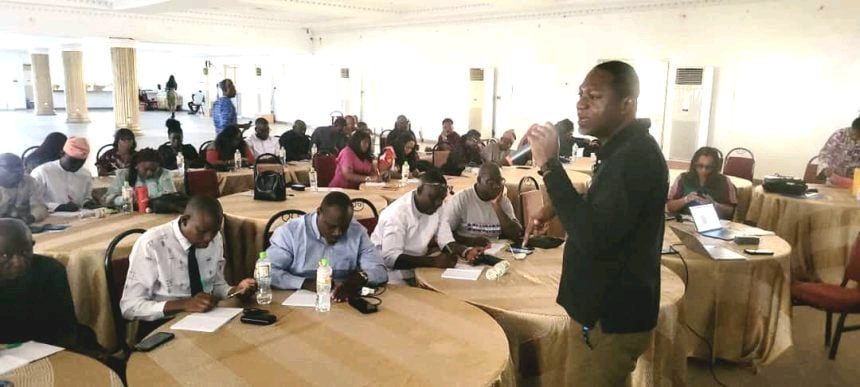
The commitment was highlighted at the opening session of a two-day media dialogue titled “Digital Learning, Artificial Intelligence, and Skills Development for Out-of-School Children,” held in Ede, Osun State, on Wednesday.
The workshop was organised by the Osun State Ministry of Education in collaboration with UNICEF, with support from the World Bank, the Global Partnership for Education (GPE), the Universal Basic Education Commission (UBEC) and other development partners. Journalists from print, broadcast and online media organisations based in the six South-West states and Edo were participants.
Speaking at the event, Celine Lafoucriere, Chief of the UNICEF Lagos Field Office, described Nigeria’s educational crisis as alarming.
She noted that millions of children remain excluded from classrooms, while many enrolled students lack basic literacy and numeracy skills. According to Lafoucriere, only one in four school-aged Nigerian children can read proficiently or perform basic mathematics by age 14, while an estimated 10 million children are completely out of school.
“These are not just numbers on a spreadsheet or in government reports,” Lafoucriere said. “These are real children growing up without the skills they need to get jobs, support their families, and participate meaningfully in the economy.”
She stressed that rapid advancements in AI and digital technologies make it urgent to equip children with future-ready skills.
She warned that children without digital literacy will be left behind, with girls facing the highest risk of exclusion. Lafoucriere also challenged journalists to sustain advocacy on the plight of out-of-school children to influence policy shifts.
“When journalists continue to tell these stories and keep them in the public space, policymakers and politicians listen. A story that refuses to disappear is a story that eventually gets acted upon,” she added.
Earlier, Murtala Jimoh, Permanent Secretary of the Osun State Ministry of Education, stated that Governor Ademola Adeleke’s administration is committed to leveraging technology to fix pressing educational gaps.
He lamented that socio-economic, cultural and security challenges keep millions of children out of school globally and locally.
Jimoh explained that digital tools can personalise education and support teachers. He noted that Osun State is already benefiting from UNICEF initiatives like the Nigeria Learning Passport and Passport to Earning platforms, which offer flexible learning for disadvantaged children.
Blessing Ejiofor, UNICEF Nigeria Communication Officer, explained that the dialogue aimed to deepen media understanding of the out-of-school crisis using data-backed insights.
Similarly, UNICEF Nigeria Education Specialist Harold Kpojime identified poverty, insecurity and infrastructure gaps as key drivers of the crisis, underscoring the importance of effectively addressing those issues.
He commended Osun State for taking strong steps to address them and urged other South-Western states to adopt innovative mo
dels to eliminate the menace.
