



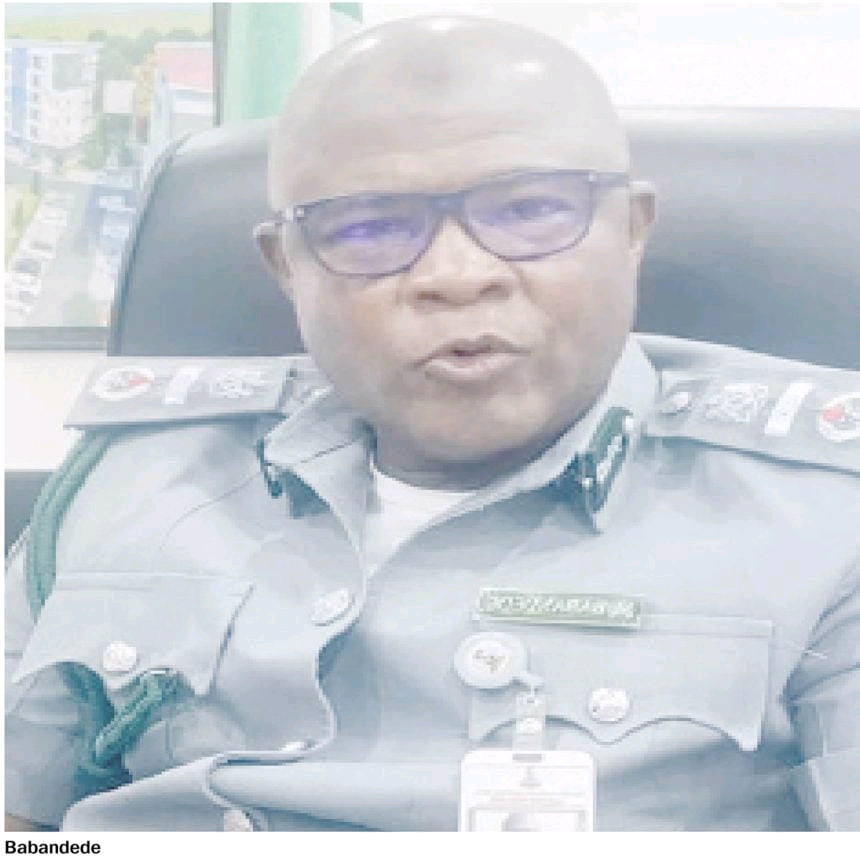

In this interview with newsmen, the Assistant Comptroller General (ACG) of Customs in charge of Zone A, Mohammed Babandede, speaks on the importance of the Zone to Nigeria’s economy, the ongoing reforms within the Customs Service, and efforts to strengthen revenue generation, trade facilitation, and national security. TOLA ADENUBI brings the excerpts.
As Customs ACG in charge of Zone A, what are your key operational strategies?
Let me start by introducing myself—I am Assistant Comptroller General of Customs, Mohammed Babandede, Zonal Coordinator for Zone ‘A’, which comprises all Customs commands in the South-West geopolitical zone. The core responsibilities of Customs are threefold. First is revenue collection; ensuring all imports are properly assessed and duties collected. Second is national security, preventing the entry of prohibited items that could compromise safety or public health. Third is trade facilitation, which is increasingly critical in today’s dynamic global trade environment. As zonal coordinator, I work closely with Area Controllers to ensure seamless trade facilitation, making our ports more efficient and competitive. For example, I regularly intervene in cargo clearance issues to prevent delays. The faster goods move, the more we stimulate economic growth, align with government policies, and support job creation, which in turn enhances national security.
How is Zone A aligning with the Nigeria Customs Service modernisation agenda?
The Nigeria Customs Service is at the forefront of modernisation. Under the leadership of the Comptroller-General of Customs, Bashir Adewale Adeniyi, most of our processes are now automated. Today, importers and agents can complete transactions—from declaration to payment and cargo release remotely. Recently, we introduced an online platform for license renewal, eliminating the need to travel to Abuja. By the end of the year, Customs aims to become fully paperless; meaning that all procedures will be digitalised. This will significantly improve efficiency and transparency.
How do you coordinate effectively with the many commands under your zone?
I maintain constant communication with Area Controllers. Issues are escalated to me when necessary, and if required, I further escalate them to headquarters. Our focus remains on enforcing compliance, ensuring security, and facilitating trade. Commands are actively intercepting contraband, including arms, ammunition, cannabis, tramadol, and codeine syrups. Their performance has been commendable in protecting the country.
Are there specific trade malpractices you’ve identified, and how are they addressed?
Yes, and the key issue is non-compliance. Importers are expected to fully and honestly declare their goods under the destination inspection regime. Undervaluation, concealment, and false declarations are common challenges. However, we have systems to detect these practices. We continuously engage stakeholders, emphasising the importance of compliance, which ultimately boosts revenue and reduces delays.
How is technology improving revenue collection in Zone ‘A’?
Technology is central to our operations. The deployment of ICT tools, scanners, and soon Artificial Intelligence (AI) is enhancing efficiency. For instance, scanners allow us to process hundreds of containers daily, compared to limited physical examinations. This increases cargo throughput and revenue. We’ve also introduced trade facilitation tools like Advance Ruling (pre-shipment decisions on valuation and classification), Authorised Economic Operator (AEO) for trusted traders, Single Window System, which streamlines document submission. All these initiatives reduce cargo dwell time and improve revenue generation.
What is the revenue outlook for the zone?
While I won’t state the exact figure off-hand, Lagos under Zone A accounts for a significant portion of national revenue. With ongoing reforms and technology deployment, we expect even higher revenue performance in 2026.
What are the major smuggling trends in the Zone, and how are you tackling them?
Smuggling is a global issue; it’s not unique to Nigeria. Our borders are porous, and many border communities see smuggling as legitimate trade due to cultural and familial ties across borders. We are addressing this through increased patrols and enforcement, deployment of advanced surveillance systems like geospatial technology, community engagement and sensitisation as well as Corporate Social Responsibility initiatives in border communities. Despite the challenges, we continue to record significant seizures, including arms and illicit drugs.
How do you manage the risks and fatalities associated with anti-smuggling operations?
Anti-smuggling operations can be dangerous. Officers have faced injuries and fatalities in the line of duty. However, the Service provides insurance and welfare support for affected personnel and their families. We also adapt our strategies, targeting smuggling hubs rather than just border points, especially in high-risk areas.
How would you describe Customs’ relationship with stakeholders and port users?
Our relationship with stakeholders is excellent. The Nigeria Customs Service is a leader in stakeholder engagement. We regularly hold consultations, like our recent meeting with the Manufacturers Association of Nigeria. Stakeholders see us as partners, and we continuously guide them on best practices to ensure smooth operations.
What are the major challenges facing Zone A?
Key challenges include resistance to change, especially with new technologies, need for continuous stakeholder education, and high cost of ICT infrastructure. Despite these, we remain committed to modernisatio
n and achieving a fully digital, paperless system.
