




Tubular batteries are widely used in homes and offices because of their ability to provide reliable backup power during electricity outages. However, poor maintenance can reduce their performance over time, with one of the most common problems being sulfation.
Contents
Maintain proper electrolyte levels
Avoid deep discharge
Use equalisation charging when recommended
Keep battery terminals clean
ALSO READ: 7 reasons your car AC is not cooling properly
Ensure proper ventilation
Check charging voltage regularly
Keep the battery fully charged during storage
Watch for signs of sulfation
Sulfation occurs when lead sulphate crystals build up on battery plates, reducing the battery’s ability to hold and deliver charge efficiently.
In this article, Tribune Online explains how to maintain tubular batteries and reduce sulfation to prolong backup power performance.
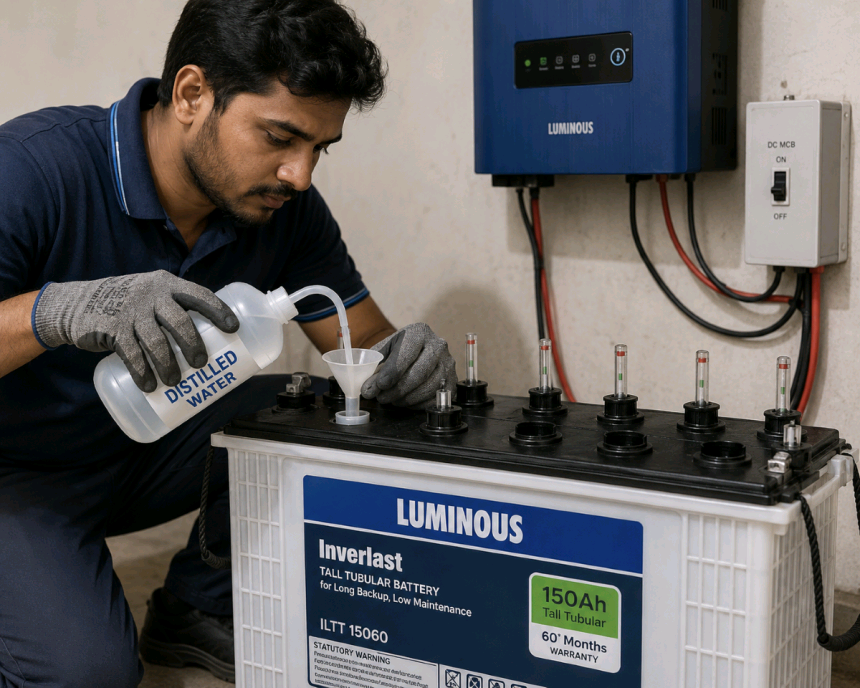
Maintain proper electrolyte levels
One of the most important maintenance tasks for flooded tubular batteries is monitoring electrolyte levels regularly.
Battery plates should remain fully submerged in electrolyte solution. If the fluid level falls below the recommended mark, the exposed plates may become permanently damaged. Only distilled water should be used when topping up the battery. Ordinary tap water may contain minerals that can affect battery performance.
Avoid deep discharge
Frequently allowing a battery to discharge completely can accelerate sulfation and shorten battery lifespan. Manufacturers generally recommend recharging batteries before they become deeply discharged. Maintaining a healthy charge level reduces crystal formation on the battery plates.
Use equalisation charging when recommended
Equalisation charging is a controlled overcharge designed to balance battery cells and reduce sulphate build-up. Many inverter systems and battery chargers include an equalisation mode.
When carried out according to manufacturer recommendations, this process may help to restore performance in batteries affected by mild sulfation.
Battery owners should always follow the manufacturer’s instructions because excessive equalisation can damage battery components.
Keep battery terminals clean
Corroded battery terminals can restrict electrical flow and reduce charging efficiency. Battery terminals should be inspected regularly and cleaned whenever signs of corrosion appear. Cleaning terminals carefully and applying a protective coating such as petroleum jelly helps to reduce future corrosion.
Ensure proper ventilation
Lead-acid batteries produce gases during charging. Poor ventilation can increase heat build-up and affect battery performance. Tubular batteries should be installed in well-ventilated locations away from excessive heat sources. Proper airflow helps to maintain stable operating temperatures and supports battery longevity.
Check charging voltage regularly
Incorrect charging voltages can contribute to sulfation and other battery problems.
Undercharging encourages sulphate crystal formation, while excessive charging can damage battery plates and electrolyte levels. Periodic inspection of inverter charging settings ensures the battery receives the correct charge.
Keep the battery fully charged during storage
If a tubular battery will not be used for an extended period, it should be fully charged before storage. Leaving batteries in a discharged state for weeks or months can accelerate sulfation and reduce capacity permanently. Periodic maintenance charging during storage is generally recommended.
Watch for signs of sulfation
Several symptoms may indicate that sulfation is affecting a battery. These include reduced backup time during power outages, longer charging periods, difficulty reaching full charge, faster voltage drops under load, excessive heating during charging and so on. Early detection may allow corrective maintenance before the problem becomes severe.
