



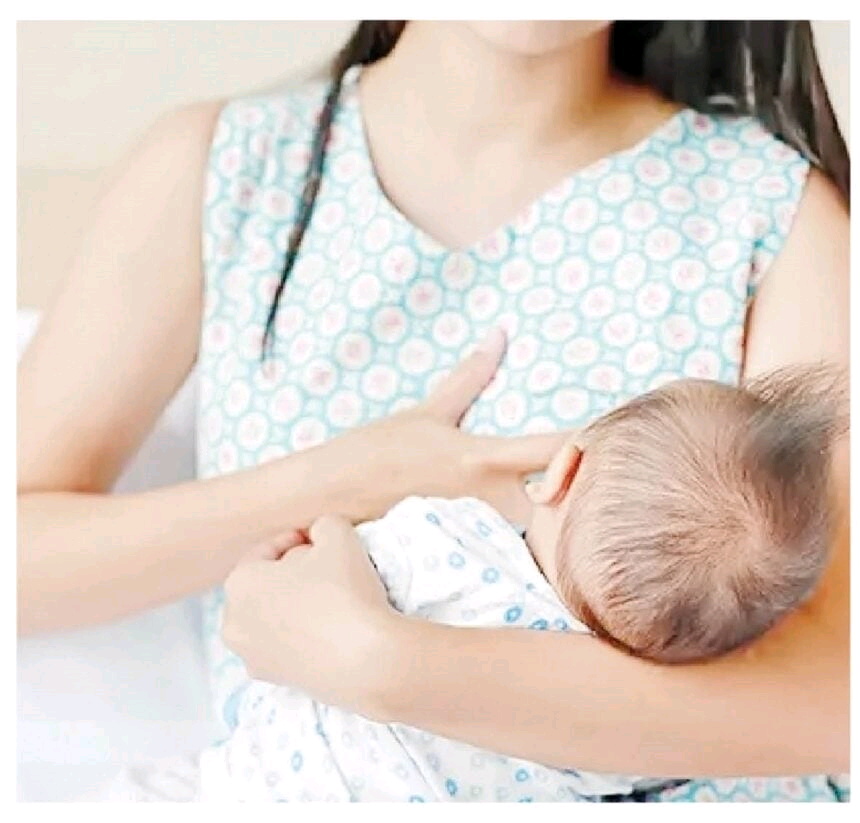

A nutrition specialist with UNICEF’s Lagos Field Office, Oluniyi Oyedokun, has reiterated that successful breastfeeding is driven not by special foods, drinks or supplements, but by a natural biological process triggered by the baby’s suckling of the breast.
Speaking on the science of lactation and breastfeeding practices, Oyedokun said milk production is fundamentally a reflex action between mother and child, activated when the baby suckles and sends signals to the brain to stimulate milk production.
Oyedokun spoke at the one-day high-level meeting on Integrated Multisectoral Nutrition Programming in the states of the South-West Geopolitical and the inauguration of local government committees on food and nutrition across 20 local government councils for the US-funded UNICEF nutrition programme.
According to him, breast milk production is controlled by what is known as the suckling reflex — a hormonal process that links the baby’s feeding behaviour to the mother’s milk supply.
“The science behind milk production is the suckling reflex. It is when the child suckles the breast of the mother that messages are sent to the brain and the pituitary gland to produce milk, and then the milk flows back for the child to feed,” he said.
He explained that the baby plays an active role in initiating and sustaining milk production.
“No breast will produce milk without the child suckling the breast. When you deprive the child of the breast, you are also depriving the mother of producing milk because it is the child that initiates the process,” he said.
Oyedokun explained that the widely held belief that milk production happens independently of breastfeeding is scientifically incorrect.
The UNICEF nutrition expert strongly advocated for early initiation of breastfeeding, recommending that newborns be put to the breast within one hour of delivery.
He described this first hour as critical for both nutrition and immunity.
Oyedokun noted that within the first hour of birth, the child is supposed to be put on the mother’s breast to start suckling, which is called early initiation of breastfeeding.
He noted that this early contact allows the baby to receive colostrum, the thick, yellowish first milk produced after delivery.
He explained that the colostrum is rich in antibodies and protective substances that help newborns fight infections.
“It is like the first immunisation for the child. If a baby is not put to the breast within the first hour, that child is deprived of colostrum, which is the first protective food the newborn needs,” he said.
Oyedokun also addressed widespread anxiety among new mothers who believe they are not producing enough milk.
He said such fears are often rooted in misinformation and cultural misconceptions that undermine confidence in breastfeeding.
“Many women have been made to believe that their breasts will not produce milk. But they forget that the breast produces milk only when the child suckles,” he said.
“If you do not place the child on the breast, you prevent the breast from producing milk,” he said, making frequent breastfeeding the most effective way to build and sustain milk supply.
The UNICEF expert also challenged common beliefs that certain foods, herbal preparations, alcoholic drinks, or supplements are required to stimulate breast milk production.
He acknowledged that good nutrition and adequate fluid intake are important for maternal health, but stressed that they do not replace the biological trigger for lactation.
According to him, “What is good for a woman is to take enough fluids and eat well. But what initiates milk production is the suckling of the breast by the child.”
He cautioned against reliance on unverified traditional remedies as the primary means of improving milk supply, noting that breastfeeding is governed primarily by demand and response between mother and baby.
Oyedokun further highlighted improper breastfeeding technique as a major barrier to effective feeding, explaining that successful breastfeeding depends not only on frequency but also on correct positioning and attachment of the baby to the breast.
He noted that babies should latch onto both the nipple and the areola, the dark area surrounding the nipple, for effective milk transfer.
“When breastfeeding a child, you do not put only the nipple into the baby’s mouth; you must include the areola, because the nerves that trigger the milk ejection reflex are located there,” he said.
He warned that poor attachment can lead to frustration for the baby, reduced milk flow, and nipple pain for the mother.
“If the baby takes only the nipple, milk will not flow properly. The baby becomes frustrated and may even bite the nipple,” he said.
The UNICEF official called for improved breastfeeding education during antenatal care, stressing that mothers should be adequately prepared before delivery.
He said healthcare providers, including nurses and midwives, must ensure that pregnant women are taught breastfeeding techniques, positioning, and management of common challenges such as inverted nipples.
According to him, “These are things that should be taught during antenatal care. And after delivery, mothers should continue to receive support on lactation management.”
He emphasised that proper counselling can significantly improve breastfeeding outcomes, particularly for first-time mothers.
Beyond the medical explanation, Oyedokun also described breastfeeding as a time for bonding between mother and child and urged mothers to treat feeding as a calm, attentive interaction rather than a rushed activity.
“Feeding time should be a patient moment. It is a time to look at your child, to interact, to relax, and to build a bond,” he said.
He added that responsive feeding, paying attention to the baby’s cues and feeding on demand, helps strengthen both milk production and emotional connection.
“The more frequently and effectively the baby feeds, the more milk the mother produces,” he said.
While cultural beliefs around foods and remedies remain widespread, the UNICEF expert emphasised that the most important factor in successful breastfeeding is simple and natural: putting the baby to the breast early and often.
“Milk production is a reflex. And it is the child who activates it,” he concluded.
