



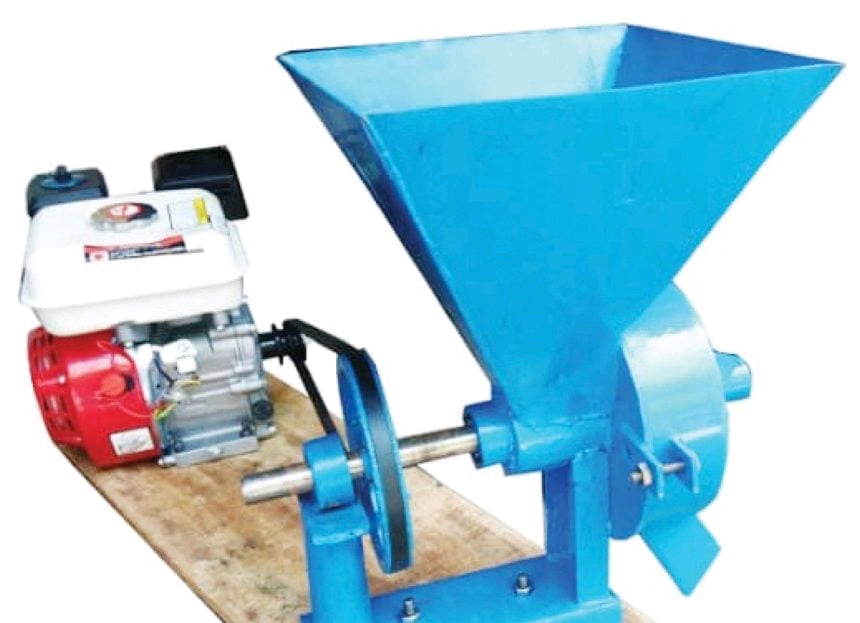

•Fabricated grinding machines as everyday silent risk
Prof. Ganiyu, a chemical pathologist at the University College Hospital, Ibadan, has explained that prolonged exposure to heavy metals has been linked to kidney and liver damage, heart disease, neurological disorders, and cancer.
“These risks are particularly concerning in households where fabricated grinding machines are used daily for food preparation,” he told Saturday Tribune.
Lead exposure can impair brain development in children, cadmium is associated with kidney damage and bone weakness, and certain chromium compounds are recognised carcinogens.
In many parts of Africa, especially Nigeria and other developing regions, fabricated grinding machines have become an essential part of daily life. They are commonly found in markets, roadside food stalls, and small household businesses, where they are used to grind pepper, tomatoes, onions, maize, and soup condiments quickly and efficiently.
Affordable, widely available, and far less demanding than traditional methods such as mortar and pestle, these machines have become indispensable in food preparation. Millions of people rely on them daily, often without considering how they are built or what may be happening inside them during processing.
However, emerging scientific studies and expert opinions are now raising concerns about something most users never see: the gradual release of metal particles into food over time.
What appears to be a simple food-processing tool may, in some cases, be a hidden source of contamination.
Fabricated grinding machines are locally made devices used to process food into paste or powder. Unlike factory-built industrial machines, many are produced in small workshops using locally sourced or recycled metal materials.
Typically, they consist of rotating metal discs or blades that crush and grind food at high speed, turning it into a smooth paste or slurry.
Because they are relatively cheap and easy to repair, these machines are widely used in communities where industrial alternatives are either unavailable or too expensive.
But researchers say the concern is not their usefulness, but the quality of construction and long-term durability.
A growing body of research shows that fabricated grinding machines can slowly release metal particles into food during processing.
This happens because the grinding plates inside the machines are made from metal alloys that continuously rub against each other at high speed. Over time, this friction leads to gradual wear and tear, allowing microscopic fragments of metal to break off and mix with food unnoticed.
At first, the contamination may be minimal and difficult to detect. However, as machines age and components weaken, the level of wear increases, and more particles are introduced into the food stream.
These particles are typically invisible to the naked eye and cannot be tasted or smelled, making the risk largely hidden from users.
“I had stopped taking my food items like pepper, egusi and beans to these mills. I use strong blenders for whatever needs to be milled,” said journalist Mrs. Adekemi Adeleye.
She also recalled cases where grease from the machines mixed directly with food during processing.
“You see black spots in the food, and the women running the mill quickly remove them,” she added.
Similarly, Mrs. Adekemi Aluko raised concerns about hygiene practices at local mills.
According to her, the water used to clean machines is sometimes unclean, while customers often bring spoiled or partially rotten food items for grinding, with little or no proper cleaning afterward.
“At the market, you will see them put half-rotten pepper into the mills. A few minutes later, the next person’s food goes into the same machine without adequate cleaning,” Aluko said.
These observations, while anecdotal, reflect broader concerns about hygiene conditions that may further worsen contamination risks beyond mechanical wear alone.
Scientific studies on fabricated grinding machines consistently show a clear trend: the older the machine, the higher the level of contamination.
One major study published in a food science journal found that machines less than 24 months old already released measurable levels of metals such as iron (Fe), manganese (Mn), zinc (Zn), copper (Cu), lead (Pb), and chromium (Cr).
However, machines used for up to 42 months showed significantly higher contamination levels due to progressive deterioration of machine components. Iron levels, for instance, increased from about 90 mg/kg to over 160 mg/kg, while lead concentrations rose by more than 300 percent in some cases. Cadmium, which was not detected in newer machines, appeared in older ones.
The pattern suggests that contamination is not accidental but cumulative, increasing steadily with machine age and usage intensity.
Moreover, fabricated grinding machines are generally considered more likely to cause contamination than industrially manufactured equipment, which is built under standardised safety controls and material specifications.
Mrs. Adenike Hammed (not real name), a small-scale producer of peanut-based nutmeal, discovered this after switching from a kitchen blender to a custom-built grinder.
Laboratory tests later revealed unusually high levels of contamination in her product, particularly iron filings. Further analysis confirmed contamination in the peanut variant of the nutmeal.
Hammed later learned that the National Agency for Food and Drug Administration and Control (NAFDAC) does not approve the use of locally fabricated grinders for commercial food manufacturing, highlighting regulatory concerns around their use in formal food production systems.
Experts say fabricated grinding machines are more likely to introduce contaminants for several structural and operational reasons.
A study published in the International Journal of Food Science and Biotechnology reinforces this concern, showing that older machines consistently release higher levels of heavy metals into food.
Researchers from the Department of Chemistry, Federal University of Technology, Akure, analysed soup condiments processed with grinding machines of varying ages, ranging from under 24 months to over 42 months.
Even newer machines released measurable amounts of metals such as iron, manganese, copper, and zinc. However, contamination levels rose sharply in older machines, with some metals increasing by more than 300 percent.
The researchers, including Ademola F. Aiyesanmi and Oluwafemi Ogunlalu, also compared mechanical grinding with traditional mortar and pestle methods. Their findings showed that traditional processing introduced significantly lower levels of heavy metals.
They concluded that while mechanical grinding improves efficiency and reduces labour, its safety depends heavily on material quality, maintenance, and manufacturing standards. Without proper oversight, they warned, mechanisation may introduce hidden chemical risks into food systems.
Across West Africa, similar patterns have been documented in different food systems and processing environments.
A study conducted around the Kwame Nkrumah University of Science and Technology (KNUST) in Ghana analysed cassava and plantain fufu from five communities, comparing unprocessed samples with those processed using steel mechanical pounding machines.
Published in the International Journal of Food Contamination, the study found that processing significantly increased levels of iron and zinc. Iron ranged from 2.817 to 7.297 mg/kg in processed samples, compared with lower levels in unprocessed foods, while zinc also showed consistent increases.
Researchers attributed this rise to friction and wear from metallic components of the machines, which gradually released trace metals into food during processing.
They also noted that grinding plates in small-scale foundries often wear out within a few months, further increasing contamination risks.
In Uganda, researchers from Mbarara University of Science and Technology found elevated levels of iron, lead, cadmium, chromium, nickel, and manganese in maize flour processed with metallic mortars and hammer mills. Metallic mortars produced the highest contamination levels, while wooden mortars showed the least.
In Nigeria, another study published in Results in Engineering found that grinding discs released metallic particles into maize during processing, estimating that up to 1.7 grams of contaminants could be generated from grinding 10 kilograms of maize.
Across studies, dry milling consistently produced higher contamination than wet milling due to increased friction. However, researchers caution that wet milling only reduces, but does not eliminate, the risk.
Environmental epidemiologist Dr. Kunle Fakunle of Osun State University explains that many locally fabricated machines are made from scrap metal or recycled materials with limited quality control standards.
“As the inside surfaces of the mill become rough or corroded over time, tiny particles begin to flake off and mix with food,” he said.
He added that the lack of standardisation means machines from different workshops can vary widely in quality and safety.
The World Health Organisation (WHO) and the United Nations Environment Programme (UNEP) have also documented that recycled industrial materials may contain hazardous heavy metals such as lead, cadmium, and chromium.
Unlike factory-made equipment, Fakunle noted, fabricated machines are rarely tested for safety before being introduced into food systems.
While some metals such as iron are essential nutrients in small amounts, excessive exposure can become harmful. Children and pregnant women are particularly vulnerable.
Some studies suggest that contamination levels in certain foods remain within international safety limits set by the WHO and FAO.
For instance, research on fufu in Ghana found that iron and zinc levels generally remained within acceptable limits, while other metals were low or undetectable.
However, researchers caution that current safety levels may not remain stable if aging machines continue to operate without proper maintenance or timely replacement.
Other studies in Nigeria and Uganda have already reported cases where lead concentrations exceeded recommended limits, while cadmium appeared in concerning amounts. Iron contamination also increased significantly with machine wear.
One study estimated that grinding 10 kilograms of maize could generate up to 1.7 grams of metallic particles, illustrating the scale at which contamination can accumulate over time.
These findings suggest the issue extends beyond individual foods and may affect multiple food-processing systems across communities.
Public health expert Dr. Adeyemi Adewole, Health Secretary for Ibadan North Local Government, notes that many people assume food-processing machines are automatically safe.
In reality, contamination may not cause immediate illness but can accumulate over time and contribute to long-term health effects. Poorly maintained machines may also harbour microorganisms such as Salmonella and E. coli, associated with food poisoning and diarrheal diseases.
He emphasized that low public awareness remains one of the biggest challenges.
“Many users do not realise that these machines can contribute to food contamination over time,” he said.
Despite these risks, fabricated grinding machines remain widely used because they are affordable, efficient, and accessible, particularly for small-scale food vendors.
Researchers emphasise that the solution is not to abandon grinding machines, but to improve their safety and regulation.
Key recommendations include the use of food-grade materials in fabrication, routine maintenance and inspection, and timely replacement of worn components.
They also call for clearer standards for local manufacturers, stronger regulatory oversight of fabricated equipment, and increased public education on contamination risks linked to machine age and usage.
While mechanised food processing has significantly reduced labour and improved food access, emerging evidence suggests it may also introduce hidden health risks.
From contaminated fufu mills in Ghana to iron-laced maize in Nigeria, research increasingly points to a quiet but important public health concern: food safety in mechanised processing requires far closer attention.
