



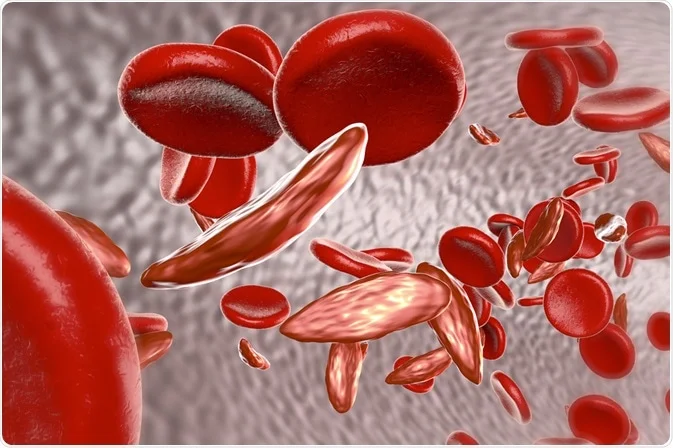

A new large-scale systematic review and modelling analysis has estimated that more than 8.8 million children and adolescents in sub-Saharan Africa were living with sickle cell disease (SCD) in 2023, highlighting a significant but largely preventable public health burden across the region.
The study, published in The Lancet Child & Adolescent Health, combined data from 40 studies across 22 countries with statistical modelling to estimate both prevalence and absolute case numbers among children under 15 years.
Researchers found that about 1.78 per cent of children and adolescents under 15 years in sub-Saharan Africa are living with the condition, with prevalence highest in Central Africa (2.07 per cent among children under five), followed by West, Southern, and East Africa.
While Central Africa recorded the highest prevalence, West Africa accounted for the largest share of cases, with an estimated 3.75 million children under 15 living with SCD, followed by East Africa (2.48 million), Central Africa (2.32 million), and Southern Africa (301,600).
The study identified Nigeria and the Democratic Republic of the Congo as the most affected countries, together accounting for several million paediatric cases. Nigeria alone is estimated to have more than 1.5 million children under 15 living with sickle cell disease, while the DRC accounts for over 1.3 million cases.
Ethiopia, Kenya, Mozambique, Niger, and Côte d’Ivoire were also highlighted as major contributors to the regional burden.
Among younger age groups, the researchers estimated 1.16 million infants and 2.75 million children under five were living with the disease in 2023 across sub-Saharan Africa.
The authors noted that haemoglobin SS (HbSS), the most severe form of sickle cell disease, remains a major driver of morbidity, alongside HbSC and other genetic variants.
The study warned that many children with the condition remain undiagnosed in early life due to weak newborn screening systems in several countries, with diagnosis often occurring only after severe illness or complications.
Researchers said the findings point to urgent gaps in early detection and care, calling for expanded newborn screening programmes, improved access to vaccines and antibiotics, and wider availability of treatments such as penicillin and hydroxyurea.
The authors emphasise that sickle cell disease remains a major contributor to preventable child morbidity and mortality in sub-Saharan Africa, particularly in high-burden countries where health system coverage is weak.
They also emphasised the need to integrate sickle cell services into existing maternal and child health systems to improve survival outcomes.
According to the authors, the true burden may still be underestimated due to limited rural data, reliance on older studies in some countries, and significant gaps in health surveillance systems across parts of the region.
They concluded that while sickle cell disease remains highly prevalent in sub-Saharan Africa, particularly in West and Central Africa, most of its severe outcomes are preventable with timely diagnosis and appropriate care.
The study calls for stronger national investment in screening and treatment programmes, alongside improved population-based data collection to guide policy and health system planning.
