



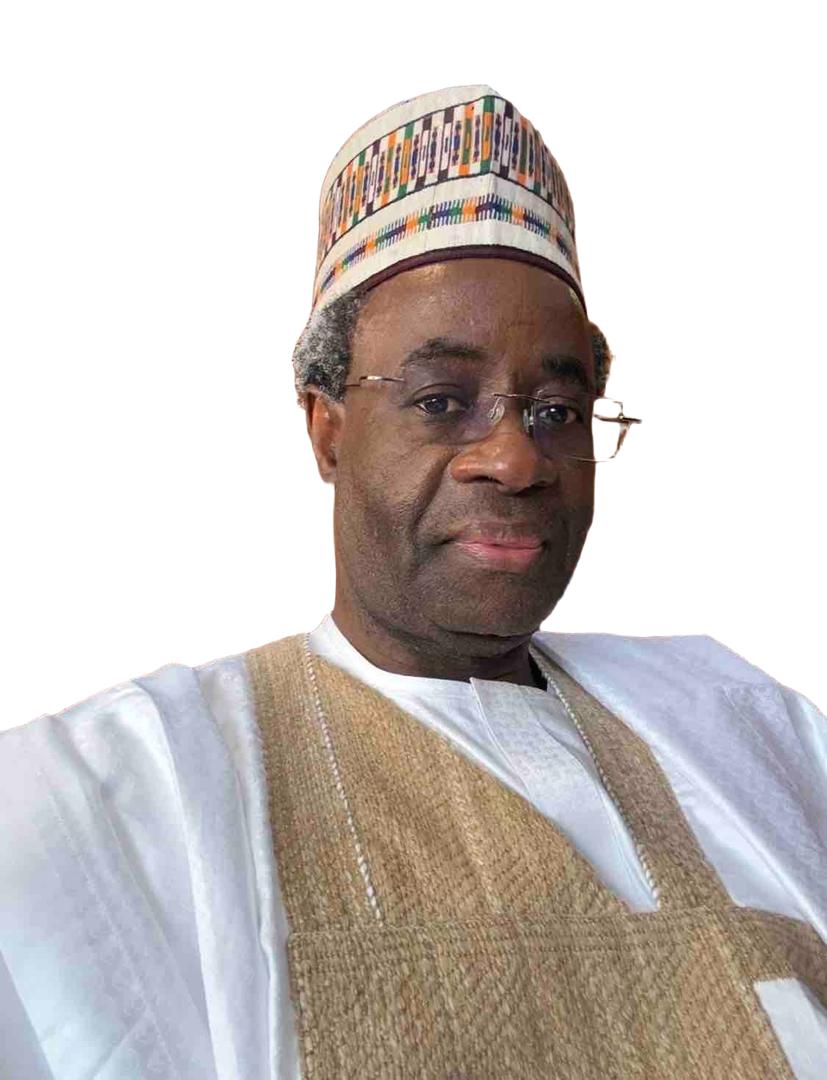

The Director-General of the Budget Office of the Federation, Tanimu Yakubu, has dismissed claims that the ₦12.83 trillion Service-Wide Vote (SWV) in the 2026 Appropriation Act is a “slush fund,” describing such allegations as misleading and based on a misunderstanding of Nigeria’s budgeting process.
In a statement issued on Wednesday, Yakubu explained that the Service-Wide Vote is a statutory budget classification designed to accommodate expenditures that cut across multiple Ministries, Departments and Agencies (MDAs) or cannot be assigned to a single institution.
According to him, the ₦12.827 trillion allocation is not a discretionary pool of cash but a collection of clearly identified federal obligations approved by the National Assembly under the Appropriation Act.
Breakdown of the 2026 Service-Wide Vote
The Budget Office disclosed that the allocation comprises:
Personnel Costs: ₦2.18 trillion
Other Recurrent Expenditure: ₦1.52 trillion
Capital Expenditure: ₦9.12 trillion
Yakubu stressed that each component has designated purposes, making it inaccurate to describe the entire allocation as an unrestricted fund.
*Personnel Costs Cover Salaries, Pensions and Benefits*
The statement revealed that the personnel component includes ₦995.28 billion for salary and wage-related adjustments, including ₦150 billion for promotion and salary arrears, as well as about ₦845.3 billion for minimum wage implementation and ongoing negotiations involving tertiary institutions, health workers and other public servants.
It also provides ₦1.049 trillion for social obligations, including:
₦882.79 billion for pensions;
₦55.50 billion for gratuities; and
₦110.78 billion for death benefits.
The Budget Office argued that describing these allocations as discretionary spending ignores the legitimate obligations owed to workers, retirees and beneficiaries.
Funding National Programmes and Security
Yakubu said the ₦1.52 trillion recurrent allocation finances nationwide responsibilities that extend beyond individual MDAs.
These include military and police operations, immunisation programmes, pension protection, the Presidential Amnesty Programme, social investment initiatives and poverty reduction programmes.
*Key allocations include:*
₦263.51 billion for GAVI and immunisation support;
₦233.71 billion for the Pension Protection Fund;
₦115 billion for the Presidential Amnesty Programme;
₦100 billion for military operations; and
₦50 billion for police operations.
Capital Vote Includes Legacy Liabilities
The Director-General noted that the largest share of the Service-Wide Vote—₦9.12 trillion—covers capital expenditure, including inherited financial commitments.
*Among the allocations are:*
₦3.5 trillion for outstanding 2025 legacy obligations;
₦1.3 trillion for outstanding 2024 contractors’ liabilities;
₦1.367 trillion for grant- and donor-funded projects; and
₦482.76 billion for Nigeria–United States health sector counterpart funding.
He explained that these provisions are intended to settle existing obligations through legally authorised budgetary processes.
*Appropriation Does Not Mean Immediate Cash*
Yakubu emphasised that budget appropriations only provide legal authority to spend up to approved limits and do not automatically translate into cash availability.
He explained that expenditures remain subject to revenue availability, cash planning, budget releases, procurement procedures, treasury controls, auditing and legislative oversight before payments can be made.
According to him, no single institution, including the Presidency, has unrestricted access to the Service-Wide Vote.
*Budget Office Defends Transparency*
Comparing the allocations, Yakubu noted that the Service-Wide Vote increased from ₦9.305 trillion in 2025 to ₦12.827 trillion in 2026, representing a 37.8 per cent increase.
He attributed the rise to higher personnel costs, pension obligations, legacy liabilities, security spending, health-sector counterpart funding, donor-supported projects and other national interventions.
He maintained that while the Service-Wide Vote should remain open to public scrutiny, criticisms must be based on the composition and implementation of the budget rather than the aggregate figure alone.
“The ₦12.83 trillion figure represents identified federal obligations approved under the Appropriation Act. It is neither a secret reserve nor a discretionary fund available to the Presidency or any other institution,” the statement said.
The Budget Office added that it would continue to provide public explanations on the composition and implementation of the Service-Wide Vote to promote transparency and accountability in public finance.
