




Chevron Nigeria Limited has revealed that it has reduced gas flaring by 98 per cent and aims to achieve 100 per cent in the near future through its three Escravos gas plants, which capture gas for storage and reuse.
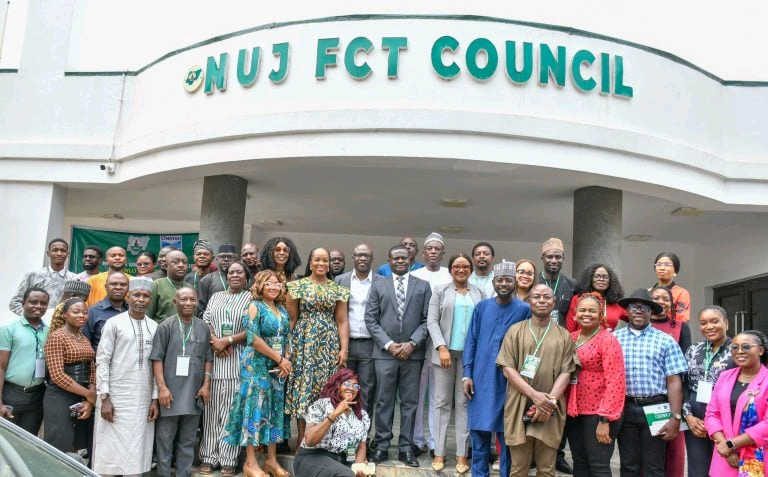
The Chief Corporate Affairs Officer and General Manager, Corporate Affairs, Chevron Nigeria Limited, Mr Olusoga Oduselu, disclosed this at a one-day capacity-building workshop themed, “Strengthening Energy Journalism Through Knowledge, Data Accuracy and Artificial Intelligence,” organised by the company in collaboration with the Nigeria Union of Journalists (NUJ), FCT Council, for energy correspondents in Abuja.
According to him, Chevron spends about $1 billion annually on local content and has invested more than $10 billion over the past 10 years in supporting local communities, Nigerian companies, and strengthening local capacity. He added that the company recognised that host communities remain the backbone of its operations, without which it cannot effectively carry out its activities.
Represented by the Communications Manager, Dr Victor Anyaegbudike, Oduselu said:
“Right now, every year, we spend about $1 billion for local content. And in the past 10 years, we have spent over $10 billion supporting companies and supporting local capacities. Where we get all those gases and make sure we put it into the Nigerian market. And we know that in doing that, we are removing all the gas that originally was flared. And we have reduced our gas flaring by 98%. The idea is for us to get to 100% very, very soon.
“Chevron had already started local community content before Nigeria introduced Nigerian content. Nigerian content came on board in 2010. Chevron started local community content in 1999. So, you can see that Chevron had already envisioned local content before Nigeria even introduced the policy. What we do is that we have what we call the standard operating procedure for injecting local community content into all the projects we undertake in Chevron.”
“That is the agreement we had with communities before the Petroleum Industry Act (PIA). It helped us establish a community-led partnership for community development. It has helped us build peace, execute numerous projects in those communities, and when we transitioned into the PIA and the Host Community Development Trust, we already had several thousands of projects in the Niger Delta that demonstrate what Chevron has been able to achieve in those areas,” Anyaegbudike added.
The Chairman of the NUJ FCT Council, Comrade Grace Ike, charged participants to ensure accuracy in their reports by relying on verified data rather than speculation.
She said, “Accurate data reporting helps hold corporations and governments accountable, protects communities from misinformation and builds public confidence in our profession. Data accuracy is our compass. In an era of abundant numbers and competing claims, credible data separates sound reporting from speculation. We must demand primary sources, verify figures, and develop the habits and tools to cross-check official statistics, company disclosures and independent datasets.”
The resource persons, Messrs Kingsley Jeremiah and Amos Dunia, in their separate presentations, urged journalists to avoid statistical errors in their reports. They stressed that while Artificial Intelligence is an important tool for modern journalism, it should not replace human judgment, and its outputs should always be verified before publication to prevent the spread
of misinformation.
