



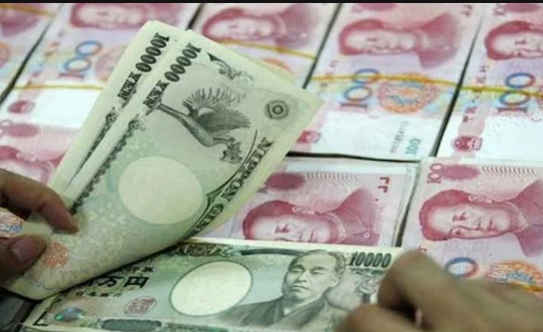

GHANA’S introduction of a yuan-based payment system for imports from China has renewed attention on Nigeria’s $2 billion currency-swap agreement with Beijing, highlighting opportunities to reduce dependence on the United States dollar in cross-border trade.
The Ghanaian initiative allows eligible importers to pay Chinese suppliers directly from their cedi accounts, using China’s Cross-Border Interbank Payment System (CIPS), without first sourcing dollars to settle transactions.
Nigeria, meanwhile, renewed a 15 billion yuan ($2 billion) currency-swap agreement with China in 2024 to strengthen bilateral trade and investment and promote the use of the naira and yuan in transactions between both countries.
The three-year agreement between the Central Bank of Nigeria (CBN) and the People’s Bank of China provides a framework for improving access to the two currencies and reducing reliance on third-party currencies for eligible transactions.
However, Ghana’s latest development highlights the importance of translating such agreements into practical payment services that businesses can readily access.
Bank of Ghana Governor, Dr Johnson Asiama, recently confirmed that Stanbic Bank Ghana was operating a cedi-to-yuan payment arrangement, while Ghana Commercial Bank was reportedly developing a similar service.
Under the system, importers can initiate eligible yuan payments from their cedi accounts without necessarily maintaining separate yuan-denominated accounts. The arrangement is designed to simplify payments to Chinese suppliers and reduce reliance on US correspondent or intermediary banks.
China accounted for approximately 22 percent of Ghana’s imports in 2024, underscoring the importance of an efficient payment channel for businesses trading with the Asian economy.
For Nigeria, which maintains extensive trade relations with China, a similar operational framework could help importers settle eligible transactions in yuan without first purchasing dollars. But it s use has been limited according to some Nigerian importers.
This could potentially reduce demand for the US currency for transactions that can be settled directly in Chinese yuan, while helping businesses manage foreign exchange costs and payment delays.
The Nigeria-China currency-swap arrangement was first established in May 2018 at 16 billion yuan, equivalent to about $2.5 billion. Its renewal in December 2024 reduced the facility to 15 billion yuan, then valued at approximately $2 billion.
The agreement is intended to provide naira liquidity to Chinese businesses and yuan liquidity to Nigerian businesses, improving the speed and convenience of transactions.
However, the benefits depend on the availability of currency, participation by commercial banks and the extent to which businesses use the arrangement.
A direct naira-yuan payment channel would not eliminate foreign exchange costs, as importers would still need to convert naira into yuan at applicable rates. Transaction charges and the willingness of Chinese suppliers to accept yuan payments would also determine its attractiveness.
Ghana’s initiative does not replace conventional international payment systems. Instead, it provides an alternative for eligible transactions while existing channels continue to facilitate payments in dollars, euros, pounds and other currencies.
Similarly, expanding Nigeria’s use of yuan would not eliminate its need for dollars to service external debt, settle dollar-denominated trade and meet other international obligations.
Nevertheless, the development presents an opportunity for Nigerian policymakers and banks to improve access to the existing currency-swap facility through practical payment solutions for importers.
With Nigeria and China already operating a $2 billion currency-swap framework, making direct naira-yuan settlement more accessible could deepen bilateral trade, reduce unnecessary demand for dollars and improve payment efficiency for Nigerian businesses.
