



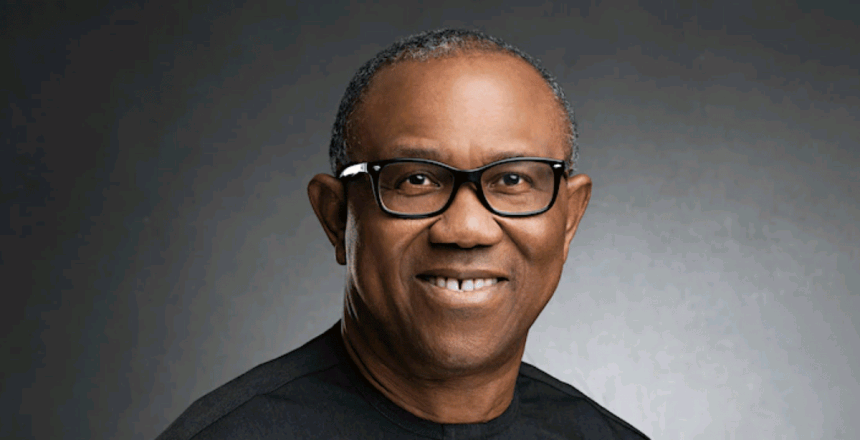

Presidential candidate of the Nigeria Democratic Congress (NDC), Peter Obi, has called for deliberate policies to transform Nigeria from a consumption-driven economy into a productive economy capable of creating jobs, increasing exports and competing in the global market.
Obi made the call after attending the inauguration of the newly elected President of the Manufacturers Association of Nigeria (MAN), Dr Eric Okoye, at the Oriental Hotel in Lagos.
In a statement shared on his Facebook page, Obi said he used the opportunity to interact with the new MAN president, former presidents of the association and other members of the manufacturing community on the prospects of Nigeria’s industrial sector.
He said Nigeria had enormous potential in manufacturing but stressed that unlocking the sector’s capacity would require the right government policies, an enabling business environment and stronger collaboration between the public and private sectors.
According to Obi, manufacturing currently accounts for about 7.5 per cent of Nigeria’s Gross Domestic Product (GDP), compared with approximately 14 per cent in Egypt, 15 per cent in Morocco, 25 per cent in Vietnam, 19 per cent in Indonesia and 20 per cent in Bangladesh.
He argued that the figures underscored the need for Nigeria to strengthen its productive base and increase the contribution of manufacturing to economic growth.
“We must therefore deliberately move from a consumption-driven economy to a productive economy, one that produces, creates jobs, adds value and competes successfully in the global market,” he said.
Obi said a stronger manufacturing sector would expand employment opportunities, strengthen Nigeria’s productive capacity, reduce dependence on imports, boost exports and improve the standard of living of Nigerians.
He congratulated Okoye and his team on their inauguration, wishing them a successful and productive tenure.
The former Anambra State governor also expressed his readiness to maintain engagement with the manufacturing sector, saying collaboration with industry stakeholders would be important in efforts to build a more productive and prosperous Nigeria.
