



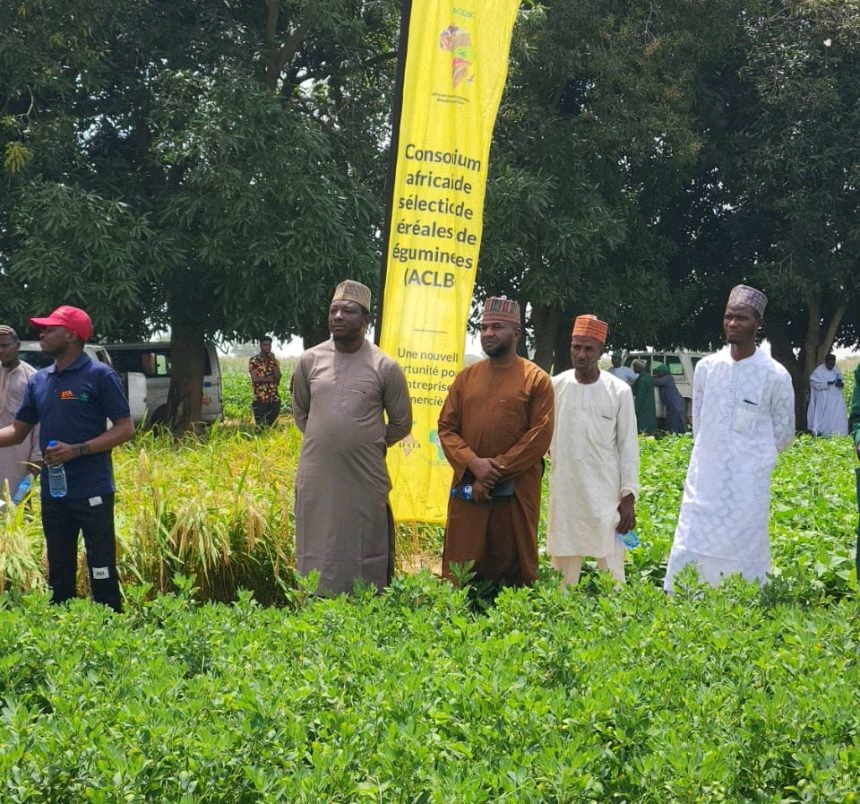

Nigeria’s seed industry is set to take a closer look at a new generation of improved crop varieties as the African Cereal and Legume Breeding Consortium (ACLBC) holds its 2026 workshop in the country from October 9 to 10.
The two-day programme, organised by the Technologies for African Agricultural Transformation (TAAT) and the African Seed Trade Association (AFSTA), is designed to bridge the gap between agricultural research and commercial seed delivery by putting TAAT-vetted varieties directly before the seed companies that can multiply and take them to farmers.
At the centre of the programme is a one-hectare demonstration plot in Zaria, Kaduna State, established with Premier Seeds, the ACLBC Champion Partner in Nigeria, alongside the Seed Entrepreneurs Association of Nigeria (SEEDAN), the National Agricultural Seeds Council (NASC) and participating TAAT Compacts.
The demonstration plot features promising varieties of maize, rice, sorghum, millet, soybean, groundnut and cowpea, giving seed companies an opportunity to assess their performance under field conditions before making decisions on which varieties to add to their commercial portfolios.
Nigeria has an estimated 600 seed companies, the highest concentration of seed enterprises in Africa, making the country a strategic market for the commercialisation of improved crop varieties.
The ACLBC is targeting more than 200 seed companies across Africa for the adoption and scaling of TAAT-vetted seed technologies.
The first day of the Nigerian workshop, October 9, is dedicated to a Green Field Day themed “Harvesting Evidence–Mature Crop Performance Showcase.”
Participants will tour the one-hectare demonstration plot to assess mature crops, with attention to yield potential, grain quality, post-harvest and processing characteristics and comparative performance among varieties.
Selected plots will be harvested on-site, allowing participating companies to observe yield and seed quality directly. Technical experts and TAAT Compact leads will also provide information on agronomic practices and performance data.
The second day, October 10, will focus on translating the field evidence into partnerships and commercial opportunities under the theme, “Scaling TAAT Seed Technologies–Partnerships for Impact.”
The programme will feature keynote presentations, technical sessions, a panel discussion and an interactive session with breeders and technology developers.
A major panel, titled “Bridging the Gap: From Breeder to Farmer – Scaling TAAT Technologies,” will bring together technology owners, seed companies, NASC and institutional breeders to examine how improved varieties can move from research institutions into commercial seed systems.
Technology developers will also make presentations on maize, rice, sorghum, millet, soybean, groundnut and cowpea, highlighting the characteristics, performance data and availability of the varieties.
The “Ask the Breeders” session will allow seed companies to seek information on selecting varieties for different agro-ecological zones, seed availability, intellectual property and licensing, as well as opportunities for commercial partnerships.
The ACLBC was established by TAAT and AFSTA to strengthen the link between breeding research and private-sector seed delivery. Through the consortium, seed companies can access genetic resources, breeding technologies and potential licensing arrangements, while breeders gain a better understanding of market demand.
ACLBC Lead, Geoffrey Nsofon, said the initiative seeks to stimulate interest among seed companies and accelerate the adoption, branding and scaling of elite varieties and hybrids developed by CGIAR centres and advanced agricultural research institutions.
He said the consortium operates a demand-driven model under which seed companies can communicate the varieties they need for specific markets and collaborate with breeders to develop or access them.
“We work on a demand-driven approach where we produce what the seed companies want, or seed companies collaborate with us to produce what they want for their particular market,” Nsofon said.
He added that the consortium could also support companies seeking exclusive lines and help them develop their own parental lines.
AFSTA Secretary General, Dr Yacouba Diallo, said the initiative was designed to create a stronger commercial pathway for improved varieties.
“We want to engage the private sector, mainly seed companies, to uptake the new varieties for business purposes by putting the new varieties in their portfolio, multiplying and selling to farmers,” he said.
Head of the TAAT Clearinghouse, Dr Solomon Gizaw, also encouraged seed companies to participate, describing the consortium as a platform for facilitating investment in breeding technologies and expanding the availability of improved seed across Africa.
The Nigerian programme builds on a similar field demonstration held in August 2025 at the Kenya Agricultural and Livestock Research Organisation (KALRO) station in Njoro.
The Kenyan event, organised by AFSTA and TAAT under the theme “Catalysing Seed Technology Adoption through Partnership, Performance & Field Experience,” featured a two-acre demonstration plot showcasing improved maize, soybean, rice, wheat, high-iron beans, sorghum and millet varieties.
Seed companies, breeders, seed inspectors, farmers and other public and private-sector stakeholders participated in the event.
The experience demonstrated the value of allowing potential adopters to assess varieties under actual field conditions while engaging directly with the institutions responsible for developing them.
The Nigerian workshop is expected to strengthen collaboration among technology developers, seed companies, regulators and research institutions while providing a platform for companies to assess varieties based on evidence rather than promotional materials alone.
AFSTA will coordinate the consortium and engage seed companies, while the TAAT Clearinghouse will provide technical oversight and programme coordination.
Premier Seeds will host the demonstration plot and support local coordination, SEEDAN will mobilise seed companies, and NASC will contribute its regulatory and quality-assurance expertise.
Participating TAAT Compacts will provide seeds and technical support, while the International Institute of Tropical Agriculture (IITA) will provide breeding and technical expertise.
The organisers say the ultimate objective is to shorten the distance between agricultural research and farmers by creating stronger commercial pathways for improved seed.
For seed companies, the programme offers an opportunity to identify varieties with commercial potential and explore multiplication, licensing and distribution opportunities. For breeders, it provides direct feedback from the market and potential commercial partners.
For farmers, the longer-term benefit will depend on whether participating companies adopt the varieties, multiply them at scale and make quality seed available through commercial channels.
