




Can Nigeria’s newest opposition platform, the Nigeria Democratic Congress (NDC), survive the legal and political storm it ran into following last week’s ruling of the High Court, which reversed its earlier decision that compelled the Independent National Electoral Commission (INEC) to register it as a political party? Collins Nnabuife, of our Abuja Bureau, captures the intrigues and controversies surrounding the development.
BARELY weeks after emerging as one of Nigeria’s fastest-growing opposition platforms following the defection of former Labour Party presidential candidate, Peter Obi, and former Kano State governor Rabiu Musa Kwankwaso, the Nigeria Democratic Congress (NDC) is facing what may be its biggest existential challenge yet.
A recent ruling by the Federal High Court in Lokoja, which set aside an earlier judgment that compelled the Independent National Electoral Commission (INEC) to register the party, has thrown the NDC into uncertainty and ignited a fresh debate about the state of Nigeria’s democracy, judicial independence and the future of opposition politics ahead of the 2027 general election.
Although the NDC insists it has not been deregistered and has already approached the Court of Appeal to challenge the ruling, political observers say the case represents the first major test of the party’s resilience.
The controversy began after an association known as the Peace Movement Party (PMP) successfully persuaded the Federal High Court sitting in Lokoja to set aside its December 2025 judgment which had ordered INEC to register the NDC.
That judgment had paved the way for the party’s emergence as one of the country’s most vibrant opposition platforms. Since it got registered, the NDC said it has conducted congresses, held national conventions, participated in the recent bye-elections, while also concluding primary elections for all elective offices ahead of the 2027 elections.
Though the ruling appears a fatal arrow pointed at its jugular, the leadership of the NDC is not taking things lying low. They have argued that the ruling of the Lokoja court is procedurally flawed because, according to the NDC, the court had already become “functus officio” after delivering its final judgment in December 2025. While briefing journalists, the National Chairman, Senator Moses Cleopas Zuwoghe, maintained that “there was no order directing our deregistration.”
“We are dissatisfied with the decision that has been made, and we have instructed our team of lawyers to immediately proceed to the Court of Appeal to challenge the jurisdiction and propriety of His Lordship’s order,” he said. The party further argued that “it is too late for anyone to attempt to use the judiciary to derail or narrow Nigeria’s multi-party democratic space.”
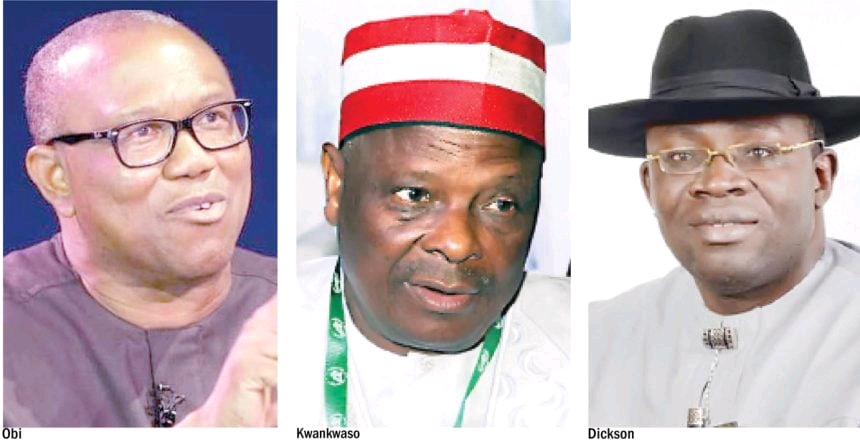
For the NDC and its supporters, the timing of the court ruling is anything but coincidental. The party points out that the renewed legal challenge came shortly after the presidential candidate of the Labour Party in the 2023 election, Mr. Peter Obi and his counterpart in the New Nigeria People’s Party (NNPP), Rabiu Musa Kwankwaso, formally joined the platform, transforming what had been a relatively unknown political party into a formidable opposition coalition.
Speaking on the development, Lagos State NDC senatorial candidate, Ladipo Johnson, alleged that the legal battle only gathered momentum after the two political heavyweights joined the party. He said: “What we know is that on the 3rd of May, His Excellency Peter Obi and Senator Rabiu Musa Kwankwaso officially moved to the NDC. The motion was filed on the 5th. So, it is clear that it was when they saw the movement of Peter Obi and Rabiu Musa Kwankwaso into the NDC that these people thought to instigate this legal matter.”
Johnson further argued that elements within government appeared uncomfortable with the growing popularity of the opposition coalition. “It is clear that this government does not want a free and fair contest,” he alleged.
According to him, despite controlling most state governments and enjoying overwhelming legislative dominance, the ruling establishment remains politically anxious because “over 60% of Nigerians have fallen into the poverty trap.”
He added: “We believe that we will be successful in ensuring that we remain registered and that we participate in the 2027 elections.”
Obi also reacted to the Lokoja ruling, describing it as another blow to Nigeria’s democratic institutions. Reacting in a Facebook post after receiving news of the judgment while attending engagements in Imo State, the former Anambra governor warned that the country’s democratic institutions were gradually losing public confidence.
“Every Nigerian committed to the country’s progress should be deeply concerned. This judgment represents another setback for our democracy and the institutions upon which our future depends,” Obi wrote.
He added: “Democracy cannot thrive where institutions lose their independence and credibility.” Rather than framing the issue as a personal political battle, Obi insisted that his concern transcended electoral ambitions.
“My concern is not about who becomes President. My concern is that Nigeria works.”
He therefore urged Nigerians “to rise above partisan interests and defend our democracy.”
Perhaps the strongest response came from the Obidient Movement, which accused the judiciary of being used to undermine opposition politics. At a press conference titled The Road to Anarchy, National Coordinator Dr. Yunusa Tanko alleged that the court decision formed part of a broader campaign against opposition parties.
“The Nigerian judiciary is actively surrendering itself to the dictation and caprices of the APC regime,” the movement asserted.
“It is no longer behaving as an impartial guardian of justice; it has been captured and weaponised as a tool of partisan warfare.” The Obidient Movement warned that persistent erosion of judicial credibility could have dangerous consequences for national stability.
“When you destroy the court of law, you leave the people with only the court of public opinion and the street,” the Movement noted.
It also argued that the ruling elite was afraid of the growing coalition around the NDC. “They see the massive, unstoppable coalition building under the NDC banner. They know they cannot win a free and fair contest on the merits of their disastrous governance.”
The APC has consistently rejected similar allegations in previous political disputes, maintaining that the judiciary operates independently and that government does not interfere in judicial decisions.
NDC National Leader, Senator Seriake Dickson, has meanwhile urged supporters not to panic, describing the ruling as lacking legal merit. He insisted the order “is illegal and will not stand”. He said the development merely confirmed the growing relevance of the party. “We are not naive to expect that the tremendous progress we have achieved in the last five months would go without attack,” he said.
Despite the legal setback, Dickson claimed the controversy had actually boosted the membership of the party.
“In fact, thousands of Nigerians across the country registered as NDC members today to show their solidarity, sympathy and support for our party,” he stated. Whether the NDC survives this challenge will largely depend on developments in the appellate courts.
Legally, the party appears determined to exhaust all judicial remedies. Politically, however, the crisis may produce unintended consequences.
History shows that opposition parties often gain public sympathy when perceived as victims of institutional suppression. The legal battle has already amplified the NDC’s visibility, dominated public discourse and strengthened solidarity among many of its supporters.
Conversely, prolonged litigation could complicate candidate submissions, campaign planning and fundraising if the uncertainty persists close to the election period. Another critical factor is the cohesion of the emerging coalition. The alliance between Obi, Kwankwaso and other opposition leaders remains one of the strongest assets available to the NDC.
If the coalition stays united throughout the legal contest, it may emerge politically stronger irrespective of the outcome. Observers however believe that the controversy surrounding the litigation could extend beyond the fortunes of the NDC. It is capable of raising broader questions about judicial certainty, political competition and the strength of Nigeria’s democratic institutions. While the courts will determine the legality of the Lokoja ruling, the political implications are already evident.
For the NDC, the coming weeks represent more than a period of legal contest, they represent a period of the party’s battle for survival and political legitimacy. Whether the NDC emerges weakened or strengthened may depend not only on judicial pronouncements but also on its ability to sustain public confidence, maintain internal unity and convert the cur
rent sympathy into nationwide political momentum ahead of the 2027 general election.
