



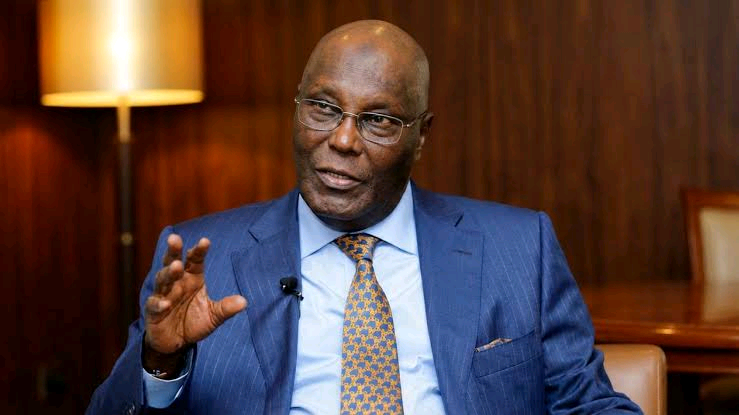

Former Vice President of Nigeria and presidential candidate of the African Democratic Congress (ADC), Atiku Abubakar, has questioned the latest revelation that the Federal Government exceeded its 2024 borrowing limit by ₦4.79 trillion, pushing fresh borrowing to ₦12.62 trillion.
Speaking on Wednesday through his Senior Special Assistant on Public Communication, Phrank Shaibu, the Waziri Adamawa described the development as further proof that the Tinubu administration had completely lost control of the nation’s finances.
Atiku said Nigerians were promised that the painful removal of fuel subsidy, repeated tax hikes, and other harsh economic measures would reduce borrowing and restore fiscal stability.
However, he said the country is witnessing the exact opposite, with endless borrowing, ballooning debt, and unprecedented waste.
According to the Budget Office, the Federal Government borrowed 61.2 per cent more than the amount approved by the National Assembly.
He added that an additional ₦3.19 trillion classified as “budget support” was obtained despite there being no such provision in the approved budget, with no clear disclosure of its source.
Atiku accused the Tinubu administration of reckless fiscal management, describing the government’s borrowing spree as “debt addiction” and “fiscal vandalism,” saying the latest borrowing fits “into a disturbing pattern that has become the defining signature of the Tinubu administration: duplication, opacity and reckless fiscal management.”
Atiku also pointed to the contradiction of rising oil revenues alongside increased borrowing.
Citing the Budget Office report, he said debt servicing alone consumed ₦12.36 trillion, exceeding the budget by more than 52 per cent.
“Nigeria is fast approaching the dangerous point where government exists primarily to borrow in order to repay previous borrowings. This is not economic reform. It is fiscal vandalism.”
According to him, the ADC believes Nigeria deserves “a government that lives within its means, eliminates waste, restores transparency, blocks leakages and channels public resources into productive investments rather than financing an endless cycle of borrowing.”
“The Nigerian people cannot continue paying today’s taxes to service yesterday’s loans while tomorrow’s generations inherit only debt.”
