



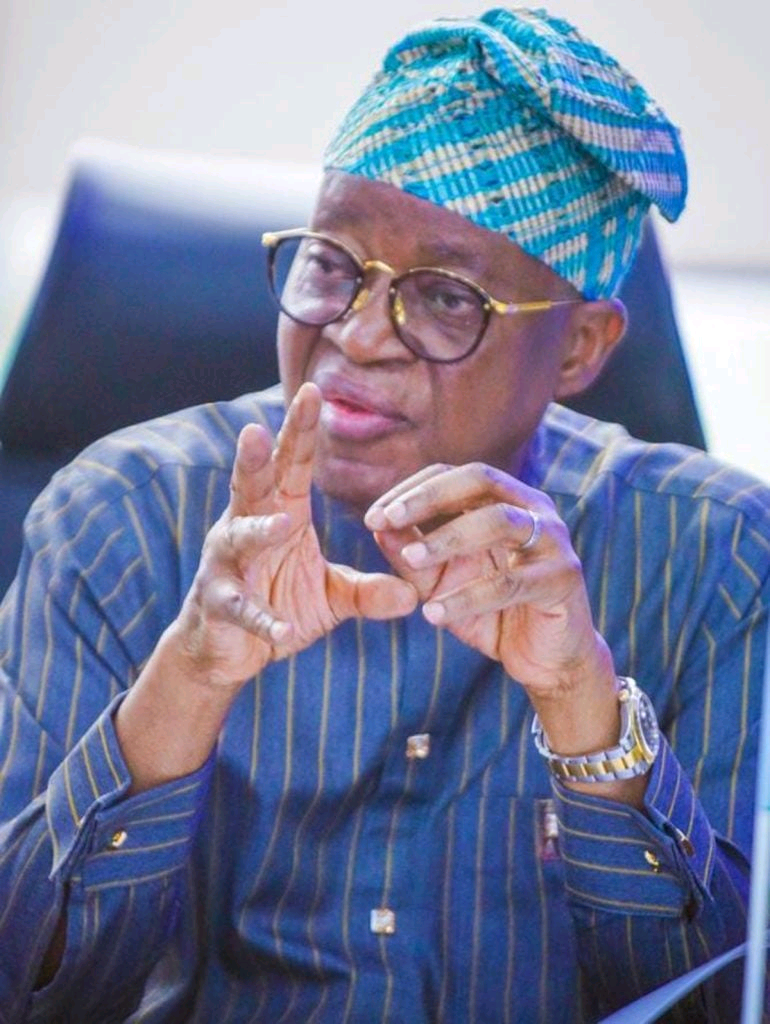

…says Nigeria ready to benefit from $3trn global investment
The Minister of Marine and Blue Economy, Adegboyega Oyetola, on Thursday spoke of how revenue from fishing, port infrastructure and other investments in the sector grew to over N1.83trillion under the administration of President Bola Tinubu.
He attributed this to reforms introduced by the administration since 2023, resulting in a revenue rise from around N700billion to N1.83trn as of 2025.
It came as the National Assembly also approved a 2026 budget in excess of N10bn for the federal government’s services in the sector.
Oyetola explained that the reforms, introduced under the National Policy on the Marine and Blue Economy, clearly articulated and established strategic priorities that strengthened the confidence of investors.
According to him, the global blue economy has a value of about $3trn, which he said the country was fully prepared to tap into and reap from in the years ahead.
He was speaking at the 2026 Blue Investment Summit held in Abuja in collaboration with Maritime Innovations Hub.
The minister gave details saying, “This policy now serves as a guide for action and a beacon for investment. I am pleased to report that these reform efforts are already yielding tangible and measurable results.
“We have successfully restored order and efficiency to the Apapa and Tin Can Island ports, improving operational performance and facilitating trade for the first time in decades. We have also achieved a significant milestone in maritime security.
“Piracy in Nigerian waters has been effectively eliminated for over four years, following the deployment of the Integrated National Security and Waterways Protection Infrastructure, popularly known as the Deep Blue Project.
“This achievement has greatly enhanced safety and restored global confidence in the maritime domain.
“Furthermore, Nigeria has regained its place on the global maritime stage by securing election into the Council of the International Maritime Organisation for the first time in 14 years.
“This milestone reflects renewed international confidence in our leadership and commitment to maritime governance.”
For example, Oyetola said the maritime sector now handled over 90 percent of the nation’s international trade, “underscoring their central role in the economy and their importance as gateways for commerce across West Africa as trade volumes continue to grow, supported by improved efficiency, enhanced infrastructure, and a more secure operating environment.”
The Chief Executive Officer (CEO) of Martine Innovations Hub, Princess Ronke Kosoko, echoing Oyetola’s submission, told the session that realising targeted goals in a $3trn economy would require early, strategic planning and huge financial commitments by government and other stakeholders for the country to be able to yield the expected results.
Other speakers at the event included the Executive Secretary of the Nigerian Shippers’ Council, Barrister Pius Akutah, and the CEO of APM Terminals, Mr Fredrik Klinke.
While Akutah warned about the implications of poor logistics and weak maritime connectivity on African countries, Klinke assured that Nigeria had the potential to unlock $3trn global blue economy if appropriate regulations and investment discipline were adhered to by stakeholders.
Akutah recalled that until lately, inter-Africa cargo shipment was impossible due to weak connectivity.
He noted, “Up until now, cargo leaving one African country to another often goes through Europe or even China before returning to Africa. This is because of weak connectivity on the continent.”
Akutah cited that example of how it had also affected the implementation of the African Continental Free Trade Area (AfCFTA) so far.
“One of the major areas of failure in implementing the African Continental Trade Agreement will be maritime logistics and connectivity”, he told the gathering, but also highlighted Nigeria’s strength, saying, “
“Nigeria has over 8,000 kilometres of coastline and more than 10,000 kilometres of inland waterways.
“This makes us a very viable hub for maritime logistics, not just on the ocean side, but within inland waterways.”
