



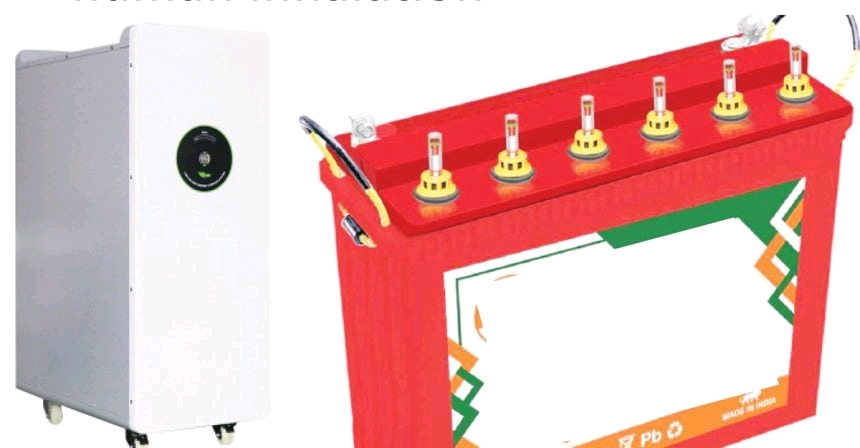

The chemistry of the battery determines where it can be installed. We have different types — gel, lead-acid, and lithium — and each one has its own safety considerations,” Mr. Akinbode Guyiro, a technician and installer at AfogTech, Ibadan, said.
Guyiro added that many solar energy consumers focus mainly on cost and convenience without fully understanding the safety implications associated with different battery technologies.
According to him, the most important factor in deciding where inverter batteries should be installed is the chemistry of the battery itself, which directly influences how it behaves during charging, discharging, and long-term use.
Lead-acid batteries, particularly the commonly used tubular variants, require special handling due to their design and the emissions they produce during use.
Tubular lead-acid batteries require periodic maintenance, including topping up with electrolyte, usually distilled water. During charging, the liquid inside heats up significantly and may release gases into the surrounding environment.
According to Guyiro, when the electrolyte becomes hot and begins to boil, it produces fumes that cannot be fully contained, even when the battery is enclosed.
“Those gases will escape no matter how tightly the battery is enclosed, causing poor indoor air quality,” he explained.
“Because of this, we strongly advise against installing such batteries inside living spaces. These types are not suitable for indoor installation because the fumes can affect people in the house over time.”
In contrast, he noted that lithium batteries are increasingly preferred because of their improved safety profile and operational efficiency.
“The lithium battery technology is safer. It doesn’t emit gases, and the chemistry makes it more stable. You can even install it inside a room,” he said.
Beyond safety, lithium batteries offer additional advantages such as longer lifespan, faster charging capability, and more efficient energy output over time. However, their higher cost remains a major barrier for many consumers across Nigeria.
Despite these advantages, many households and small businesses still opt for lead-acid batteries because they are more affordable, widely available, and easier to replace locally when faults occur.
“Lithium batteries are better and safer, but they are more expensive. That is why many people still go for the tubular batteries,” Guyiro explained.
He emphasised that installers have a key role to play in bridging the knowledge gap between technology and safe usage.
“Many customers don’t know the risks. It is our responsibility to inform them about what is safe and what is not,” he added.
He also noted that some smaller solar products — such as rechargeable lamps, lanterns, and compact backup systems — now use lithium batteries and are relatively safer than older models that rely heavily on lead-acid technology.
Inverter battery systems have become an essential part of daily life for many Nigerians, offering a practical solution to unreliable electricity supply, frequent blackouts, and rising fuel costs for generators.
However, according to Dr. Adeyemi Adewole, a public health specialist, the growing adoption of these systems must be matched with proper safety awareness and installation practices.
He warned that low public awareness and unsafe installation practices are exposing many households to long-term health and safety risks that are often underestimated.
With electricity supply remaining inconsistent across the country and fuel prices continuing to rise, inverter systems have become increasingly common in both residential homes and commercial spaces. Yet awareness of their potential hazards remains limited.
“Even among medical professionals, detailed knowledge of the emissions and risks is limited. If awareness is low at that level, then it is much lower in the general community,” he said.
This knowledge gap, he added, means many households adopt installation and storage practices based on cost, convenience, or hearsay, without fully understanding the possible consequences.
According to Dr. Adewole, one of the most serious risks comes from toxic emissions released by certain inverter batteries, particularly tubular lead-acid types.
“These batteries can emit substances such as lead-related compounds, hydrogen gas, and acid fumes,” he explained. “These emissions are not safe for human inhalation, especially over long periods of exposure.”
He noted that prolonged exposure may not cause immediate or noticeable symptoms, but over time, it can lead to respiratory irritation, neurological effects, and potential long-term organ damage.
The risk becomes significantly higher when batteries are installed in enclosed indoor spaces with poor ventilation, a situation that is common in many Nigerian homes due to space constraints and security concerns.
Despite these risks, many households still choose to keep inverter batteries inside living spaces. According to Dr. Adewole, this decision is often driven by fear of theft rather than lack of awareness alone.
“In an ideal situation, these batteries should be installed outside the living area. But people fear theft. If you leave it outside, it may be stolen. So they bring it indoors, which then exposes everyone in the house to harmful emissions,” he said.
This trade-off between security and safety, he added, has become a widespread and persistent challenge in many urban and semi-urban communities.
Another major concern is the quality of installation and the level of expertise among installers in the growing solar industry.
Dr. Adewole stressed that not all installers are properly trained or certified, especially as demand for solar solutions continues to increase rapidly.
“In Nigeria, once a technology becomes popular, many people rush into the business,” he said. “Some installers are just electricians with limited additional training in solar systems, and improper installation can lead to electrical faults and fire outbreaks.”
He also identified overcharging as a significant risk factor. Without proper charge-regulating systems or properly configured inverters, batteries may overheat, swell, degrade prematurely, or in extreme cases, explode.
Such failures can result in injuries, destruction of property, and in rare cases, house fires.
While public attention often focuses on batteries, solar panels themselves are not entirely risk-free. Although generally considered safe, overheating — especially in large installations with multiple interconnected panels — can occasionally lead to fire incidents.
“There have been reports of solar panels catching fire,” he said, referencing a past incident in Lagos. But compared to battery-related risks, these are relatively minimal.
A major structural challenge, according to Dr. Adewole, is the absence of specific regulations governing residential solar and inverter installations in Nigeria.
“There are general public health guidelines, but nothing specifically regulating how individuals should install or store these systems at home,” he explained. “This is still an emerging area, so regulatory frameworks are lagging behind adoption.”
The lack of formal oversight leaves households heavily dependent on informal advice, unregulated technicians, and inconsistent safety standards across the industry.
He warned that this regulatory gap increases the risk of improper installation and makes it difficult to enforce accountability when accidents occur.
To reduce risks, he recommended installing batteries in well-ventilated, non-living spaces whenever possible, using certified and experienced installers, ensuring inverters have automatic charge-regulation features, and avoiding the use of non-distilled water during maintenance.
He also emphasized the importance of routine inspection and preventive maintenance, noting that many failures occur due to neglect rather than immediate technical faults.
Dr. Kunle Fakunle of the Department of Public Health, Osun State University, also warned that poor handling and storage practices could expose households to fire hazards, toxic emissions, and environmental contamination.
According to him, unsafe practices such as stacking batteries without adequate spacing, placing units near flammable materials, exposing them to high ambient temperatures, or installing systems without professional guidance significantly increase the risk of overheating and fire outbreaks.
He explained that most fire-related incidents involving solar systems are not caused by solar panels themselves, but rather by faulty installation, poor wiring, inadequate ventilation, or weak maintenance culture.
“This is why it is crucial for households and businesses to work with certified and experienced solar installers who follow established safety protocols and industry best practices,” he said.
Exposure to toxic gases, including hydrogen fluoride, can cause acute respiratory irritation, lung damage, and other serious complications.
Over time, repeated exposure may also affect brain function, memory, breathing capacity, kidney function, energy levels, and — in children — physical growth and cognitive development.
The National Fire Protection Association identifies lithium-ion batteries as potential fire sources due to a process known as thermal runaway — a chain reaction in which rising temperatures trigger further heat production, potentially leading to fires or explosions.
Similarly, the United Nations Environment Programme has warned that leaking battery electrolytes can contaminate soil and groundwater, posing serious risks to ecosystems and human health.
In many developing countries, weak waste management systems worsen the problem, allowing discarded or damaged batteries to release hazardous materials into the environment unchecked.
Dr. Fakunle called for more research to properly assess the scale of risks associated with solar and inverter systems in Nigeria. He also advocated a coordinated approach involving stronger regulation, public education, improved installer certification, and wider adoption of safer technologies.
Immunology expert Prof. Ganiyu Arinola also raised concerns about exposure to lead and industrial acids commonly found in battery components.
He warned that lead is a highly toxic element with no known safe level of exposure and that it can accumulate in the body over time, even at low doses.
Prolonged exposure, he added, may lead to multiple systemic health problems affecting vital organs, including the brain, kidneys, and cardiovascular system, as well as overall wellbeing.
Arinola also cautioned that some inverters produce low humming sounds, which, while harmless, may become irritating or stressful to sensitive individuals over long periods of exposure in quiet environments.
As solar adoption continues to rise across Nigeria, experts emphasise that battery technology choice and installation practices are just as important as access to electricity itself.
While inverter systems provide a critical solution to persistent energy challenges, emerging evidence suggests that poor installation practices, limited public awareness, and weak regulatory frameworks may introduce avoidable health, safety, and environmental risks.
The growing consensus among experts is clear: the future of safe solar adoption will depend not only on technological advancement, but also on education, enforcement of standards, and responsible installation practices across all levels of the industry.
