




The federal government has called for stronger collaboration and participation by state governments in developing Nigeria’s critical minerals, saying subnational governments must create an enabling environment that attracts investment and supports the transformation of the country’s mineral resources into jobs, industrialisation and sustainable economic growth.
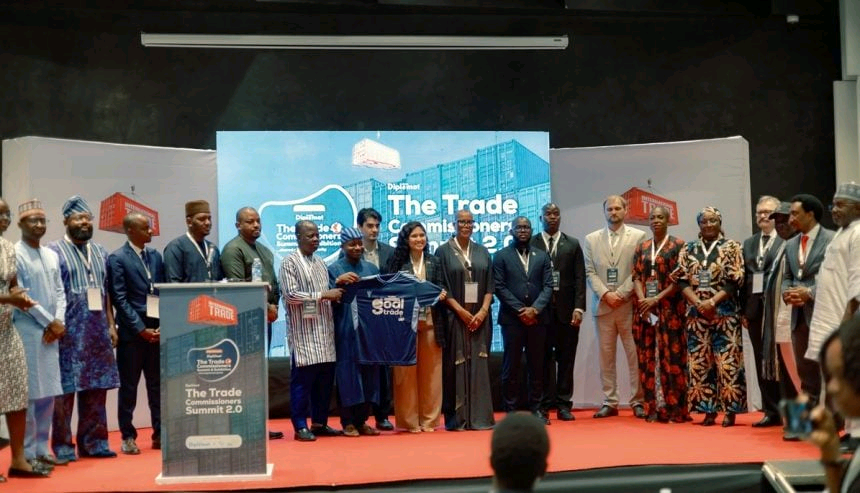
The call was made by the Director-General of the Nigeria Mining Cadastre Office (NMCO), Engr. Obadiah Simon Nkom, during the Trade Commissioners Summit 2.0 held in Abuja.
Represented by the agency’s Director of Mining and Cadastre, Barr. Yakubu Yahuza Muri, the DG said although ownership of mineral resources rests with the Federal Government, successful mineral development depends heavily on the commitment and support of state governments.
Speaking on “The Role of State Governments and the Opportunities Available for Development of Critical Minerals,” Nkom said states have critical responsibilities in providing security coordination, local economic planning and workforce development that encourage mining investments.
He noted that investors increasingly assess states and regions, rather than countries alone, when making investment decisions.
“The states that provide ease of doing business, infrastructure readiness, skilled labour, community stability and policy consistency become choice destinations for investors,” he said.
According to him, the responsibility of state governments is not to administer mineral titles but to create the conditions under which the nation’s mineral assets can be converted into jobs, infrastructure, industrialisation, community development and sustainable prosperity.
The summit, co-hosted by Globalafri Diplomat and Afreximbank at the Afreximbank African Trade Centre, brought together commercial attaches, diplomats, development partners, captains of industry and state commissioners for commerce to explore opportunities for strengthening subnational diplomacy and attracting trade and investment to Nigeria’s states.
In his welcome address, Publisher of Globalafri Diplomat, Sòókò Deji Ajomale-McWord, stressed the need to expose subnational governments to international opportunities that would accelerate development, particularly as ongoing reforms devolve greater responsibilities in key sectors to states.
He said Nigeria’s regions were once major economic drivers, citing cocoa production in the old Western Region and the groundnut pyramids in Northern Nigeria before the country’s governance structure became increasingly centralised.
Ajomale-McWord said recent reforms in sectors such as electricity, taxation and security, alongside the establishment of regional development commissions, have opened new opportunities for states to pursue economic growth through partnerships with the private sector and the international community.
“There are clear indicators that the current administration is taking bold steps to return Nigeria to the days when the regions were strong. One of these indicators is the National Regional Development Policy (2026–2030) and the establishment of more regional development commissions to coordinate development across different regions,” he said.
He encouraged commercial attaches and development partners to extend their engagement beyond Abuja and Lagos, declaring that Nigeria’s states and regions are open for business.
Representing the Comptroller-General of the Nigeria Customs Service, Dr. Bashir Adewale Adeniyi, Deputy Comptroller M.M. Nuhu commended the organisers for providing a platform that promotes trade, investment and economic cooperation.
“At a time when nations are increasingly interconnected through trade and commerce, forums such as this provide valuable opportunities for dialogue, partnership and the exchange of ideas that can drive sustainable economic growth,” he said.
During a session on digital trade and cross-border commerce, Afreximbank officials Al Amin Ishaq and Ugonna Nwankwo showcased the African Trade Gateway, the bank’s digital ecosystem designed to facilitate trade, improve cross-border payments and connect businesses across Africa’s value chains under the African Continental Free Trade Area.
A fireside discussion with BlueGrid Advisory Managing Partner, Olawale Aro, highlighted the importance of stronger collaboration between federal and state institutions implementing electricity sector reforms to enable states maximise the opportunities created by decentralisation.
A panel comprising MTN Nigeria’s Head of Public Sector and Corporate Segments, Akinbulejo Onabolu, GIG Mobility Chief Executive Officer, Dr. Okhae Enahoro, and Afreximbank’s Al Amin Ishaq also emphasised the need to bridge infrastructure gaps, strengthen cross-border payment systems and integrate the informal sector into digital trade strategies.
Commissioners for commerce from various states presented investment opportunities in their respective states to development partners, trade offices and commercial attaches, while the organisers unveiled Goal for Trade, a sports diplomacy initiative designed to foster collaboration among stakeholders across the international trade ecosystem.
