



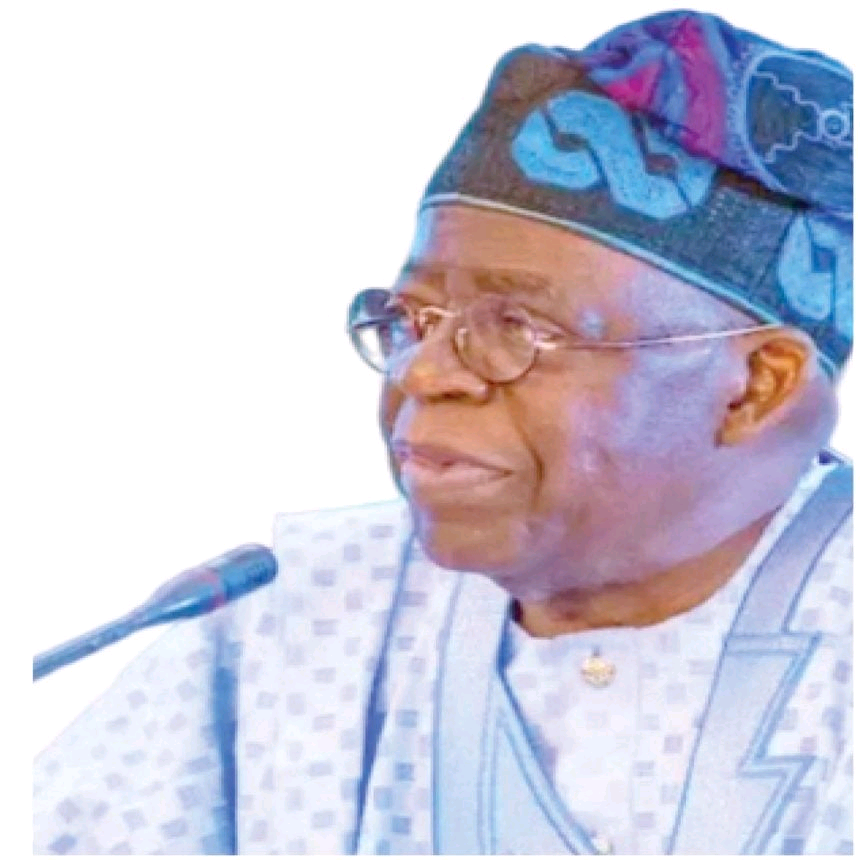

President Bola Ahmed Tinubu has reaffirmed his administration’s commitment to building a Nigeria free from extreme poverty, declaring that lifting millions of citizens out of poverty will serve as the primary yardstick for measuring the success of his govern ment’s economic policies.
Speaking through the Minister of Finance and Coordinating Minister of the Economy, Mr. Taiwo Oyedele, at the unveiling of three major intervention programmes in Lagos, President Tinubu emphasized that initiatives targeting jobs, agriculture, social investment, and community resilience are at the heart of the Renewed Hope Agenda.
The event launched the Nigeria Community Action for Resilience and Economic Stimulus Additional Financing (NG-CARES), the Solutions for Internally Displaced and Host Communities Program (SOLID), and the Human Capital Opportunities for Prosperity and Equity (HOPE) programmes.
Together, the initiatives represent over US$3 billion in coordinated investments aimed at supporting smallholder farmers, small and medium enterprises (SMEs), displaced persons, and improving access to primary healthcare, education, and grassroots governance.
In his keynote address, read by Minister Oyedele, President Tinubu highlighted the programmes as concrete steps toward delivering on campaign promises.
“These are not just programs; they are promises kept. Under the Renewed Hope Agenda, we came into office pledging to reform our economy, secure the nation, and invest in our people. Today, we act on that pledge, protecting the vulnerable, empowering communities, and building the human capital that will carry Nigeria forward,” he said.
The President noted rising confidence in the economy, driven by recent reforms, but stressed that progress must translate into tangible improvements in the lives of ordinary Nigerians.
“Real prosperity means no Nigerian is left behind on our journey to a one trillion US dollar economy by 2030,” he added.
The Renewed Hope Development Plan (2026–2030) provides the strategic framework for these efforts, focusing on economic diversification, human capital development, and stronger sub-national institutions.
Key economic indicators cited include an 11.2percent real GDP growth and nearly 10percent per capita income growth in US dollar terms last year, with similar performance projected for the current year. Foreign reserves have surpassed $40 billion, while inflation has declined significantly from its 2024 peak.
Through expanded cash transfer programmes, the government says it has already reached 15 million vulnerable households, lifting an estimated 7.5 million people out of poverty.
The newly launched programmes are designed to build on this momentum.
The programs are: NG-CARES Additional Financing: A US$1.25 billion World Bank-supported programme targeting smallholder farmers and small businesses to boost productivity and resilience.
SOLID Programme: A US$300 million World Bank-financed initiative that bridges humanitarian relief with long-term development, focusing on infrastructure, livelihoods, and services for internally displaced persons and their host communities.
HOPE Programmes: A US$1.5 billion flagship investment comprising three components — HOPE-GOV (ward-level governance), HOPE-PHC (primary healthcare), and HOPE-EDU (education) — aimed at strengthening foundational learning, supporting teachers, improving healthcare access, and enhancing local governance.
The President described the initiatives as “one coordinated national strategy for poverty reduction, human capital development, and community resilience,” noting their ward-centric approach to align federal, state, and local governments.
He commended the Ministers of Budget and Economic Planning, Education, and the Coordinating Minister of Health and Social Welfare for their roles in the programmes’ development.
In a call to action, the minister urged state governments, development partners, and implementing agencies to fully commit to the success of the programmes.
“We’re building a Nigeria where extreme poverty is banished, where every child has access to quality education and healthcare, and where every community can withstand adversity and recover faster and stronger. That is our vision. That is our promise,” he concluded.
The formal launch of NG-CARES Additional Financing, the HOPE programmes (GOV, PHC, and EDU), and SOLID is expected to directly impact millions of Nigerians across all states and wards in the coming months.
