



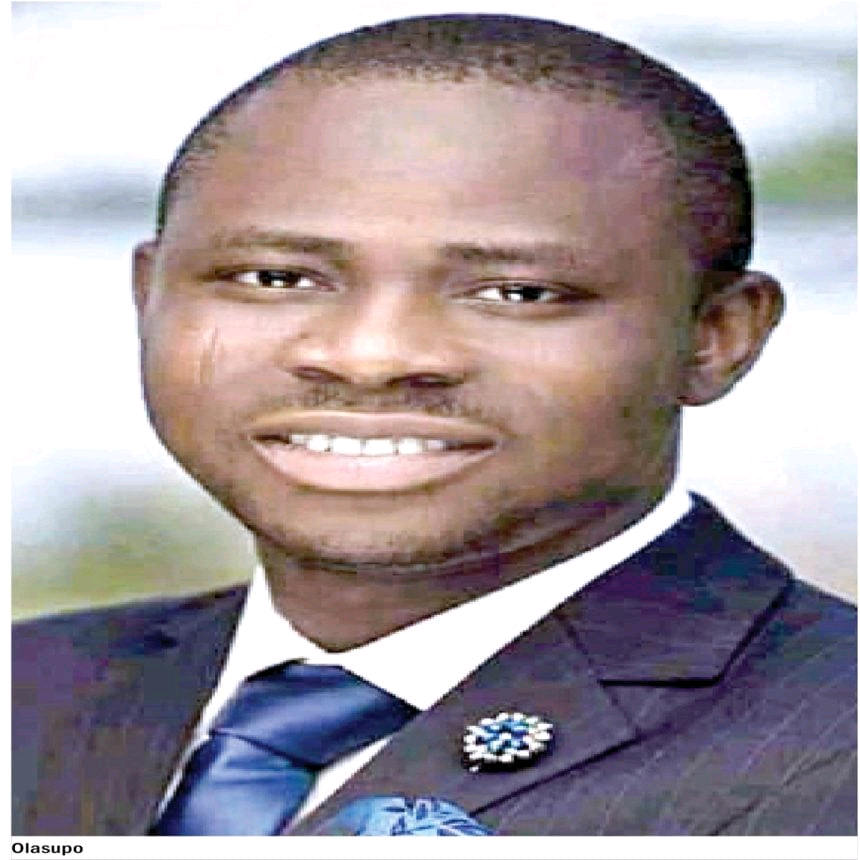

Abideen Olasupo is the chairman of BallotEyes and Truth Guard Election Working Group, which deployed 75 observers to different polling units and 30 local government area roving observers across each of the 30 LGAs of Osun in the August 15 governorship election. He speaks with PHILIP IBITOYE on his group’s takeaways from the poll and recommendations for 2027 elections.
NOW that the Osun governorship election has been won and lost, what lessons do you take away from the contest against the coming 2027 general election?
The clearest lesson is that elections are now won and lost in two theatres at once; the polling unit and the information environment. Ahead of Osun, at Brain Builders Youth Development Initiative, we treated peace as infrastructure, not an afterthought: we engaged stakeholders across the divide community leaders, party agents, youth groups and security actors on a simple compact that no political ambition is worth a human life, and we deployed EVIT.NG, our Election Violence Incident Tracker, so that citizens could report threats and violence in real time and we could flag hotspots to security agencies for preventive, rather than reactive, response. In fact, we had a stakeholders dialogue on Protecting women participation in elections and all the efforts led to having almost zero violence during the Osun election. Alongside that, through FactCheckAfrica we stood up the TruthGuard Situation Room with partners Oroki Hub to monitor deepfakes, recycled videos and manipulated media before they could inflame tensions. The takeaway for the 2027 general election is that credible elections need this layered civic architecture; violence monitoring (most especially violence against women), verified information and voter education built early and at national scale, not improvised in the final weeks.
The election saw a 43 per cent voter turnout, significantly higher than the 27% in the presidential contest and 31% in the governorship elections in 2023. What do you say to registered voters still thinking about staying on the sidelines in 2027?
Osun’s roughly 43 per cent turnout was an improvement on the 27 per cent presidential and 31 per cent governorship figures you cite from 2023, and that is worth acknowledging. But I want to be honest about what that number hides: analysis of the results shows about 1.3 million registered Osun voters still did not cast a ballot, and turnout remains below the 54 per cent the state recorded in 2014. So my message is direct: when you stay home, you do not remove yourself from the decision, you simply hand it to someone else to make on your behalf. Every seat you leave empty is filled by another person’s preference. If your worry is that your vote will not count or will not be protected, then the answer is not withdrawal; it is the very civic vigilance Osun demonstrated. Come out, vote, and stay to see it counted. Apathy has never reformed a single institution in this country. Participation is the only currency politicians actually respect.
We saw Osun voters stay with their votes and keep up the pressure on INEC officials; was that key to the rancour-free outcome and is that what Nigerians nationwide must learn from in 2027?
It was decisive. We deployed 75 observers to different polling units across the 30 LGAs, 30 LGA roving observers and what we saw in Osun voters refusing to leave until results were counted at the polling unit and uploaded, being respectful but putting firm pressure on INEC officials is the practical meaning of “protect your vote.” That behaviour, which even prominent voices amplified on the day, narrows the space for manipulation because the result is witnessed and documented before it can be altered. It is also, frankly, the strongest antidote to violence and rumour: when citizens can see the process, they are far less vulnerable to the false “results” and panic content that our TruthGuard room was set up to debunk. For 2027, yes, Nigerians nationwide should internalise this: vote, document, verify, and stay peacefully until your unit’s result is recorded. But I would add a caution: citizen vigilance must never tip into confrontation. The goal is transparency, not clashes at collation centres.
A source of concern on election day was the three-hour downtime on the IreV portal. What do you think of that situation and its implications for 2027?
This is a serious concern and we should not minimise it. INEC put the interruption at about two hours, but we noticed it was more than two hours. With our collaboration with Legis360, we were able to track the results live from IreV portal. Either way, a public results-viewing portal going silent for hours during collation is exactly the window in which suspicion, conspiracy theories and fabricated “leaked results” thrive and our fact-checkers spent that period debunking precisely that kind of content. IreV is not the statutory collation mechanism, but it is the transparency promise INEC made to Nigerians, and a promise that stalls at the critical moment erodes trust regardless of the technical explanation. For 2027 the implication is stark: if a single off-cycle state election in Osun can overwhelm the upload process, the commission must stress-test that architecture for 36 states and the FCT well in advance. Redundancy, honest real-time communication when systems lag, and full public accounting for every outstanding polling unit are non-negotiable. Technology that only works when it is convenient is not transparent; it is a liability.
Heavy security deployment helped keep the Osun election peaceful, but security forces will be stretched thin nationwide in 2027. Does this reliance on heavy militarization in off-cycle polls create a false sense of security for a general election?
Our own organisation (Brain Builders Youth Development Initiative) had a series of community engagement, sensitisation, town hall and stakeholder dialogue. Yes, the substantial security deployment helped keep Osun largely peaceful, and that matters given a pre-election period that civil society and the police documented as unusually violent, with dozens of incidents and multiple deaths across high-risk local governments. But peace that depends on flooding one state with personnel is not a scalable or healthy model. You cannot replicate that footprint simultaneously across the entire federation in 2027; the forces will be stretched thin, and adversaries know it. So yes, it risks a false sense of security: we may be mistaking heavy boots for genuine electoral safety. The durable solution is intelligence-led, preventive security and, crucially, the visible neutrality of security agencies; a concern that Brain Builders Youth Development Initiative repeatedly raised in Osun. That is why our EviT approach matters: early-warning data lets agencies act on specific threats rather than blanket the ground. Militarisation treats the symptom on election day. Professional, impartial, intelligence-driven policing treats the disease.
The Osun election for all its positives still featured incidents of vote-buying, what is your message to voters who agree to trading their votes and security agencies watching the polling units?
Vote-buying was one of the genuine stains on an otherwise improved process, with credible reports of cash inducement at polling units. To the voter tempted to sell: understand the transaction you are entering. That few thousand naira is not a gift; it is the market price of your silence for the next four years. Once you have sold your vote, you have also sold your right to demand roads, schools, jobs or accountability, because you have told that politician your conscience is for hire. No one who buys your vote is planning to serve you; they are recovering an investment. To the security agencies stationed at polling units: vote-buying is a crime committed in plain sight, and looking away is a choice. Passivity signals that inducement is tolerated, which guarantees it multiplies in 2027. Enforcement must be visible, consistent and non-partisan — buyers and sellers alike. Our part continues after the vote too: at FactCheckAfrica(https://factcheckafrica.net/) we are still tracking the aftermath, and we are drawing on the detailed post-election analysis now in circulation to keep the public conversation anchored in verified data rather than spin. Because the work of protecting an election does not end when the winner is declared. We are also documenting different cases of post-election violence through eviting
