



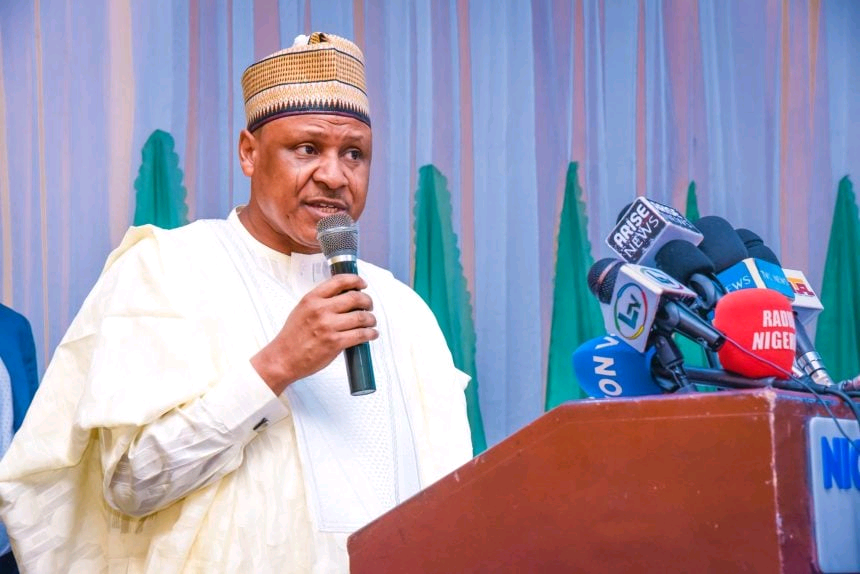

The Minister of Information and National Orientation, Mohammed Idris, has warned that any attempt to restore petrol subsidy would reverse Nigeria’s economic gains, weaken investor confidence and worsen pressure on the country’s finances.
Idris gave the warning in an op-ed published on Monday, August 24, 2026, titled “Restoring Fuel Subsidy Will Reverse Nigeria’s Economic Gains,” in which he outlined the fiscal benefits of subsidy removal and the potential consequences of returning to the old regime.
According to the minister, restoring the subsidy would recreate the economic challenges that made the policy unsustainable, including fiscal pressures, fuel scarcity, market distortions and incentives for arbitrage.
“Restoring subsidy would almost instantly return Nigeria to the economic conditions of 2022, recreating the same fiscal pressures, distortions, scarcity and incentives for arbitrage that made the old system unsustainable,” he said.
Idris argued that Nigerians must consider what the country would have to sacrifice if scarce public resources were redirected towards subsidising petrol.
“Do we restore petrol subsidy, or sustain student loans and consumer credit for young Nigerians? Do we restore subsidy, or preserve higher allocations to states and local governments? Do we restore subsidy, or continue funding roads, rail, power and security?” he asked.
He also questioned whether Nigeria should return to subsidy at the expense of funding healthcare, education and social protection programmes for vulnerable citizens.
The minister recalled that Nigeria spent about $10 billion on fuel subsidies in 2022, at a time when oil production was declining and government revenues were under pressure.
He cited warnings by the World Bank that the subsidy was consuming resources that could have been deployed to critical sectors, including education, healthcare, infrastructure and social protection.
According to Idris, the Federal Government’s recently presented “Nigeria’s Reform Scorecard: The Benefits, Costs and Harms Prevented” showed that subsidy removal had released N15.8 trillion in resources for the Federation between June 2023 and December 2025.
He said the Minister of Finance and Coordinating Minister of the Economy, Taiwo Oyedele, disclosed that about N5.43 trillion accrued to the Federal Government, N6.52 trillion to the states and ₦3.88 trillion to local governments.
Idris clarified that the N15.8 trillion did not represent a separate pool of cash but rather resources released within the wider fiscal system of the Federation.
He said the additional fiscal space had strengthened the capacity of state and local governments to meet salary and pension obligations while enabling investments in essential services and federal priorities such as infrastructure, security, agriculture and human capital development.
The minister further said the Reform Scorecard recorded approximately N6.47 trillion in additional spending on strategic infrastructure.
He added that more than ₦400 billion had been committed to major social investment initiatives, including the Nigeria Education Loan Fund (NELFUND), MOFI Real Estate Investment Fund (MREIF) and CREDICORP.
According to him, social transfers had also reached more than 10 million Nigerian households.
Idris, however, noted that the Federal Government was still shouldering a significant electricity subsidy, estimated at N3.14 trillion between June 2023 and December 2025.
He warned that restoring petrol subsidy would therefore place an additional burden on public finances.
The minister said the Organised Private Sector and other stakeholders in the economy had similarly cautioned against reversing the ongoing reforms.
“Nigeria cannot build tomorrow’s economy by returning to yesterday’s unsustainable subsidy regime. We have moved beyond that model,” Idris said.
He urged Nigerians to assess the reforms from the perspective of long-term economic stability, arguing that the country needed to sustain policies aimed at building a stronger, more productive and financially sustainable economy.
The minister’s position comes amid renewed calls in some quarters for the restoration of petrol subsidy, with proponents arguing that it would cushion the impact of high fuel prices and the rising cost of living.
However, Idris maintained that returning to the former subsidy regime would undermine the fiscal gains achieved since the removal of the subsidy and expose the country to the same structural problems that previously made the policy unsustainable.
