



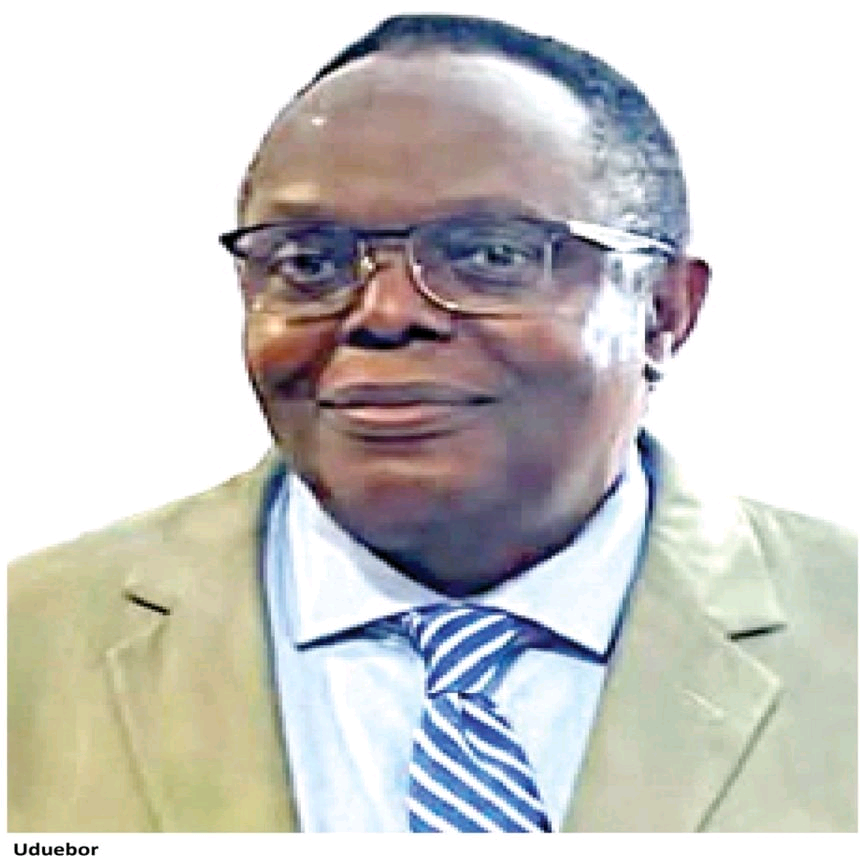

Orianelle Aigbe Uduebor, an engineer, is among many distinguished professionals plying their trade in the diaspora with a keen interest in development issues concerning Nigeria as it prepares for another major general election. Uduebor, who lives in Oakland, California, United States of America, speaks with KUNLE ODEREMI on the raging debate over fuel subsidy removal, what should be central in electioneering for the 2027 elections, migration of Nigerian professionals to advanced countries, among other crucial issues.
WHAT remarkable success, progress and achievements has Nigeria made after the military exit from power in 1999?
First, thank you for having me. Let me begin by saying that the return to democratic governance in 1999 was, in itself, a major achievement. Nigeria has now had more than 25 years of uninterrupted civilian rule, and that continuity should not be underestimated. Before 1999, military intervention repeatedly disrupted governance and weakened democratic institutions. Since then, Nigeria has made progress in several important areas. First is the institutionalisation of democratic governance. Elections are now part of national life, and governments have changed through the ballot. Citizens have more space to organise, criticise the government, and participate in politics. Democracy is not perfect, but it is far more rooted than it was before 1999.
Second is telecommunications liberalisation. GSM transformed how Nigerians communicate, trade, bank, learn, and innovate. The digital economy, fintech, and wider technology ecosystem all grew from that opening. Third, Nigeria undertook important financial sector reforms. Banking consolidation in the mid-2000s strengthened the system and helped lay the foundation for one of Africa’s more advanced financial and fintech environments. Fourth, Nigeria significantly reduced its external debt. The 2005 Paris Club agreement, including roughly $18 billion in debt relief, restored fiscal breathing room and showed what disciplined economic management could achieve.
There were also reforms in pensions, procurement, oil-sector transparency, ports, aviation, taxation, and public financial management. Nigeria joined the Extractive Industries Transparency Initiative and created institutions such as the Economic and Financial Crimes Commission (EFCC) and the Independent Corrupt Practices and Other Related Offences Commission (ICPC) to strengthen accountability. The rise of Nollywood, Afrobeats, Nigerian literature, fashion, technology, and entrepreneurship has also reshaped Nigeria’s global image. Nigerian youth have shown that creativity does not have to wait for perfect conditions.
But we must be clear: the story is one of progress and unfinished work. Population growth has outpaced improvements in income, jobs, electricity, security, education, and healthcare. With millions of young Nigerians entering the labour market every year, job creation remains one of the country’s most urgent tests. So, one can say clearly that since 1999, Nigeria has deepened democracy and recorded major sectoral gains, but it has not yet converted those gains into broad-based economic transformation.
Beyond these underlying issues you have highlighted, what fundamental reforms ought to be carried out now for the country to get out of the quagmire, so to speak?
That is a very good question. Nigeria must move from government-driven development to productivity-driven development, period. The first reform is political and constitutional. We need institutions that work, regardless of who occupies the presidency or governorship. Courts, legislatures, electoral bodies, regulators, and local authorities must be strong enough to function professionally and independently. Second is electoral reform. Nigerians must believe their votes count. Political parties should become durable institutions, not temporary vehicles for powerful individuals. Internal democracy, open primaries, campaign finance rules, and reliable election technology are essential. Third is public sector reform. Government should be leaner where it is bloated and stronger where it must deliver. We need a professional civil service where promotion is based on competence and performance, not personal connection.
Fourth is fiscal reform. Nigeria must expand its tax base without crushing businesses and households, while ensuring that public money is spent transparently and efficiently. Fifth is power sector reform. Electricity may be the single most important infrastructure reform Nigeria can make. A manufacturer running on diesel cannot compete with one operating on reliable grid power.Sixth is education and healthcare reform. Nigeria cannot become an industrial or technology power without healthy, educated, and skilled citizens. Seventh is security sector reform. Investment will not grow where people, homes, farms, roads, and businesses are unsafe. In the end, Nigeria needs policy consistency. A new government should not abandon every good programme simply because a previous government started it. The goal is clear: make Nigeria a country where hardworking citizens and productive businesses can thrive without needing political connections.
While acknowledging that some core issues still subsist, some Nigerians say the country has made a paradigm shift from the status quo that existed before 2023, when the Tinubu administration came into office, in terms of economic reforms and financial matters. Do you share such views about major leaps in the way the country has been run so far and why?
Yes, but with an important qualification. The Tinubu administration clearly moved away from longstanding economic practices: removing fuel subsidy, unifying the foreign-exchange market, reducing monetary financing of deficits, and pushing domestic revenue collection all represent major policy shifts. The IMF and World Bank have acknowledged these reforms as important for macroeconomic stability and resilience. So, in economic management, there has indeed been a significant change in direction. However, we must distinguish reform from results. Reforms can correct distortions before they improve daily life. Subsidy removal and exchange-rate adjustment raised prices and weakened purchasing power before their long-term benefits could be felt. The real question is therefore not whether reforms have occurred. It is whether they are creating jobs, lowering inflation, improving infrastructure, attracting investment, and raising living standards. There is evidence of macroeconomic improvement, but both the IMF and World Bank still point to poverty and household hardship as serious concerns. My view is that the direction of reform is broadly necessary, but the next phase must move from stabilisation to growth. Nigerians need jobs, affordable food, electricity, security, and a real chance to improve their lives.
Then, how instructive is the coming general election in Nigeria vis-à-vis the socioeconomic, political future of Nigeria and its citizens?
The 2027 election is highly significant because Nigeria is approaching a major turning point. The Independent National Electoral Commission (INEC) has fixed the dates for presidential, National Assembly, governorship and state House of Assembly elections in 2027. This election should be bigger than a contest between individuals. It is about the kind of Nigeria we want to build. An economy dependent on oil, contracts, and consumption, or one driven by production, agriculture, technology, services, and exports; a state built on patronage, or one built on strong institutions. We must also ask whether Nigerian politics will continue to revolve around ethnicity, religion, and origin, or whether it will finally be judged by competence, performance, character, and vision. Those are the real questions. The danger is that some politicians may again reduce the election to ethnic arithmetic and religious sentiment. Nigerians must resist that temptation. The 2027 election should be about performance, competence, character, and vision.
I want you to set issues that should benchmark the ongoing electioneering for the 2027 general election.
I would point to 10 core issues every candidate should address. One is security and national unity; two, the cost of living and food security; three, employment and entrepreneurship; four, reliable electricity; five, education and human capital; six, healthcare; seven, economic diversification and industrialisation; eight, electoral and institutional reform; nine, corruption and accountability, and 10 is devolution and good management at the state and local government levels. Above all, candidates should explain how they will deliver what they promise. Nigeria has suffered from too many manifestos filled with beautiful aspirations but no implementation mechanisms. Every presidential candidate should be able to tell Nigerians how many jobs they can create, how those jobs will be financed, how electricity will improve, what will happen to food production and security, and what measurable progress citizens should expect within two years. Campaigns should compete on ideas, not slogans.
What fundamental engagements should the key stakeholders, including Civil Society Organisations, professionals cum bodies, even political leaders, lead and promote as the build-up to the elections gather momentum and why?
Civil society and professional organisations have a major responsibility. They should create neutral national policy platforms where presidential and gubernatorial candidates answer the same serious questions on the economy, security, healthcare, education, energy, infrastructure, and governance. Professional bodies should prepare sector-specific scorecards. Engineers should interrogate infrastructure plans, economists should test fiscal proposals, lawyers should examine institutional reforms, doctors should assess healthcare programmes, and educators should review education policy. CSOs should also deepen voter education and counter misinformation. The media must also do its part. It should reduce the oxygen given to political theatre and focus on substantive questioning, evidence, and fact-checking. Political leaders, for their part, should commit to democratic conduct: no violence, no ethnic incitement, no religious hatred, no intimidation, and no abuse of state power. Most importantly, Nigerians must become more discerning voters. We need a shift in expectations: from “What will you give me?” to “What will you build for Nigeria?” That mindset would help citizens demand long-term vision, credible plans, and accountable leadership instead of short-term personal benefits.
One area Nigeria did spectacularly well many decades ago was on foreign policy, which sent chills down the spines of even leaders of Western countries. With the hindsight of history, how would you analyse the foreign policy of Nigeria yesterday, today vis-à-vis the future, given the trajectories of the country? Note that its foreign policy then was Afrocentric.
Let me state unequivocally that Nigeria’s Afrocentric foreign policy was historically justified. As Africa’s most populous country and one of its largest economies, Nigeria had a duty to support liberation, regional stability, and continental integration. Its role in Southern Africa and in regional peace efforts reflected that responsibility. But the world has changed. Nigeria’s foreign policy should remain Africa-first, but it must also be more strategic and more clearly tied to national interest. We should support African unity and peace while placing stronger emphasis on trade, investment, technology, and economic diplomacy. Our embassies should not function only as diplomatic outposts. They should also be platforms for trade, investment, technology, tourism, culture, and markets for Nigerian agriculture, manufactured goods, creative products, tech services, and professional expertise. Nigeria should deepen ties with the United States, the United Kingdom, the European Union, China, India, the Gulf states, and other emerging powers, but not as a client of any bloc. The principle should be simple: Nigeria should be a friend to all, a customer to none, and a firm defender of its own interests.
How can the country tame the Japa syndrome, the brain drain saga and capital flight that has taken its toll on different fronts at home?
We should not simply condemn Japa. Migration is a symptom, not a disease. People leave because they believe they can find better opportunities elsewhere. The answer is not to stop Nigerians from travelling; it is to make Nigeria safe, productive, and attractive enough for people to stay and for many in the diaspora to return. Nigeria needs a deliberate diaspora engagement strategy. Millions of Nigerians abroad have expertise in medicine, engineering, technology, finance, education, science, and enterprise. Government should make it easier for them to invest, start businesses, transfer knowledge, and contribute to national development. Brain drains can become brain circulation. A Nigerian doctor abroad can help train doctors at home; an engineer in the United States can support projects in Nigeria; a tech entrepreneur in London can establish a Nigerian operation. Capital flight must also be addressed by restoring trust. Investors move money out when rules are unpredictable, security is weak, corruption is high, the currency is unstable, or property rights are uncertain. The best way to keep capital in Nigeria is not coercion; it is confidence.
How best can Nigeria attract Direct Foreign Investments such that all the moribund industries in Lagos, Ibadan, Kano, Kaduna, Enugu and Port Harcourt that once provided huge job opportunities for the critical mass of the population can come back to life?
Nigeria should stop seeing foreign investors merely as sources of money. Serious investment brings capital, technology, management expertise, market access, and jobs. Investors will not come simply because Nigeria has a large market; they will come when Nigeria becomes a credible place to produce. The priorities are therefore clear: first, electricity. Industrialisation cannot occur on expensive diesel generators. Second, infrastructure and logistics. Ports, roads, railways, warehouses, and digital systems need to lower the cost of transporting goods. Third, predictable regulation. Investors must understand the tax, customs, labour, and foreign exchange rules and trust that those rules will not change arbitrarily. Fourth, access to foreign exchange. Investors should be able to repatriate legitimate profits and import the equipment they need. Fifth, security. Factories cannot operate efficiently in insecure environments. Sixth, industrial clusters. Nigeria should develop focused manufacturing zones around Lagos, Ibadan, Kano, Kaduna, Enugu, Port Harcourt, and other cities, with reliable power, water, transport, security, and efficient public support. Seventh, access to finance. Local manufacturers shouldn’t have to compete globally while taking out loans at very high interest rates. Eighth, trade policy. Nigeria should support local production without protecting inefficient industries forever.
The World Bank has also emphasised electricity, transport infrastructure, access to finance, ease of doing business, and fair competition as central to private-sector growth and job creation. I would also distinguish reviving old industries from building new competitive ones. We do not need to recreate every factory exactly as it operated in the 1970s or 1980s. Technology, consumer demand, and global supply chains have changed. Instead, we should ask what each location can produce competitively today. One, Lagos can grow into a bigger centre for making products, moving goods, handling money, and using technology. Two, Kano has the potential to grow into a significant hub for processing agricultural products and manufacturing goods. Three, Kaduna can use agriculture, manufacturing, and its good location to its advantage. Four, Ibadan can grow its agro-processing, education, technology, and manufacturing sectors. Five, Enugu can improve its technology, service, and manufacturing areas. 6. Port Harcourt and the broader Niger Delta region can develop into key areas for energy services, petrochemical industries, shipping activities, and manufacturing related to processing oil and gas products. The aim should be to build Nigerian industries that can compete globally, not industries permanently sheltered from competition.
It was wonderful talking to you. Let me end by saying this: Nigeria’s problem is not a shortage of talent, resources, ideas, or opportunity. Our problem has been the failure to convert those assets into consistent national results. We have the population, market, natural resources, entrepreneurial energy, and global position to become one of the world’s major economies. What we need is leadership, strong institutions, policy consistency, security, infrastructure, and a society that rewards hard work rather than political connection. The next stage of Nigeria’s dev
elopment must be about turning potential into performance.
