



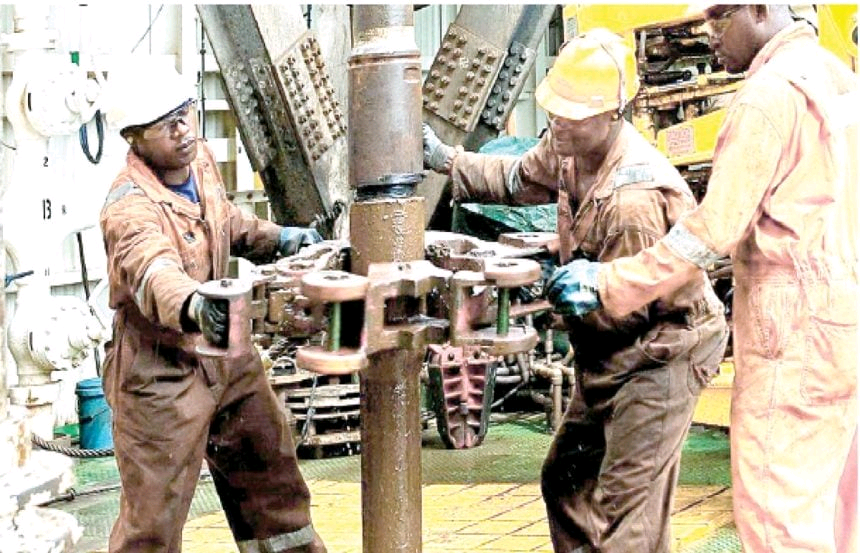

Nigeria’s Q2 2026 oil export earnings rose to $9.39 billion. CHIMA NWOKOJI writes on how crude exports, pipeline security and energy output remain central to the country’s external trade performance.
NIGERIA recorded a strong positive balance in its goods account in the second quarter of 2026, underpinned by a substantial rise in total exports to US$20.08 billion from US$15.56 billion in the first quarter. Crude oil exports led the surge, climbing 15.78 percent to US$9.39 billion, while gas exports rose sharply by 40.15 percent to US$3.63 billion. Refined petroleum products increased by 66.24 percent to US$3.94 billion, and non-oil exports grew 25.30 percent to US$3.12 billion. Crude oil imports simultaneously declined from US$1.39 billion in Q1 to US$0.58 billion in Q2.
These gains translated into a current account surplus of US$7.54 billion, a 67.93 percent increase from the US$4.49 billion recorded in Q1 2026 and well above the US$5.17 billion posted in the corresponding period of 2025.
Provisional balance of payments statistics released by the Central Bank of Nigeria confirmed the improved external position. The CBN noted that the current account surplus reflected higher export earnings and an expanded goods account surplus. For many stakeholders, the continued protection of oil pipelines through the operations of Tantita Security Services Nigeria Limited (TSSNL) and the relative peace and stability maintained in the Niger Delta were decisive factors that enabled these results. The company’s work helped convert what had previously been a pattern of persistent losses into measurable gains in export revenue.
The increases in crude oil, natural gas, refined products, and non-oil exports did not occur in isolation. They were supported by deliberate operational interventions that addressed long-standing vulnerabilities in the petroleum value chain. TSSNL, appointed by the Federal Government to safeguard oil pipelines and related assets, has been central to this shift. President Bola Ahmed Tinubu’s decision to entrust the firm, led by High Chief Dr Government Oweizide Ekpemupolo (popularly known as Tompolo), with pipeline surveillance responsibilities created the conditions for more reliable production and evacuation. Working alongside other security agencies, TSSNL focused on securing critical infrastructure, reducing illegal bunkering and pipeline vandalism, and restoring operational continuity across the Niger Delta.
Tantita’s sustained presence has allowed Nigeria to move from a reactive posture of constant loss management toward greater stability, planning capacity, and growth. Uninterrupted flow of petroleum resources has supported higher accounted-for production, enabling the country to expand its effective oil production quota and sharply curtail the scale of oil theft that once undermined both revenue and credibility. The firm’s track record in mitigating risks associated with pipeline operations has positioned it as a reliable partner in protecting the economic backbone of the nation. Stakeholders continue to emphasise the need for ongoing collaboration with TSSNL, arguing that the security of oil infrastructure remains foundational to sustainable national development.
In any society, certain assets generate the economic and monetary benefits that underwrite progress. These may be operating assets, non-operating assets, or leased assets. In Nigeria’s case, the petroleum infrastructure that moves crude and gas from wellhead to market constitutes one of the most critical of these assets. When that infrastructure is compromised, production targets slip, refining schedules are disrupted, export commitments are missed, and fiscal projections lose reliability. When it is protected, the entire system gains coherence.
President General of the Niger Delta Progressive Alliance, Nse Victor Udoh, has articulated this point clearly. He observed that effective pipeline protection has enabled national institutions to progress from reactive crisis management to strategic foresight, from temporary containment to durable systems-building, and from uncertainty-driven decisions to calculated national ambition. “It is important to clarify the role of pipeline surveillance within the wider energy landscape,” Udoh stated. “Energy security encompasses the full value chain, from exploration and production to refining, distribution, pricing policy, and subsidy frameworks. Pipeline surveillance does not manage these domains. Its mandate is precise: safeguarding critical infrastructure that transports petroleum resources. Yet this single function has proven foundational. Without secure transportation channels, production targets falter, refining plans collapse, exports decline, and fiscal projections become unreliable.”
He continued: “Asset protection, in this context, is not a supporting activity. It is a precondition for economic order. In effect, the pipeline is the hinge on which the entire petroleum value chain turns. When that hinge is weak, every other link in the chain carries strain. When it is secure, the entire system gains coherence.” The operational impact has been visible. Sustained monitoring and rapid response systems have reduced pipeline breaches and illegal tapping. Receipt rates have improved markedly, and national output has risen to levels not consistently achieved in recent years. This restoration of reliability has helped Nigeria reclaim market share previously lost to competitors such as Angola and Libya, reinforcing the country’s standing in international oil markets.
Economic stability follows predictability. Secure crude flows allow refineries to plan feedstock intake with greater assurance. Export commitments can be met without the constant threat of sudden shortfalls. Gas-to-power projects face fewer unplanned shutdown risks. Investors are able to assess Nigeria’s petroleum sector against clearer risk profiles. Surveillance therefore does more than deter theft; it reintroduces reliability into national energy planning. Reliability, in turn, is the foundation upon which sustainable economic growth is built. With more predictable flows, national budgeting becomes more credible, infrastructure planning more precise, and long-term contracts easier to negotiate. Predictability functions as a silent currency in modern economies, and pipeline surveillance has begun restoring that currency to Nigeria’s petroleum sector.
The benefits extend into public finance. Higher accounted-for production translates directly into increased export revenues, stronger foreign exchange inflows, and improved fiscal capacity. Performance indicators at the national oil company in recent periods illustrate a shift toward greater profitability and operational efficiency, driven in part by reduced losses and enhanced continuity.
Beyond the immediate gains from security, the broader investment climate in Nigeria’s oil and gas sector is showing signs of renewal. Catherine Uju Ifejika, Chairman and Chief Executive Officer of Brittania-U, has highlighted the importance of additional capital deployment into mature assets, citing the company’s experience with the Ajapa field. More than US$400 million was invested after Brittania-U acquired the asset from Chevron. The investment included the drilling of additional wells and the deployment of a Floating Production, Storage and Offloading facility. Production commenced at approximately 2,300 barrels per day in 2010 and subsequently stabilised at higher levels, demonstrating the returns available when capital is committed to existing assets under improved operating conditions.
The Nigerian Upstream Petroleum Regulatory Commission has indicated that new incentives for offshore oil and gas projects carry the potential to attract up to US$50 billion in fresh investment into the country’s offshore energy sector. Realizing this potential, however, will require an expanded and upskilled workforce, including competencies in digital industries. Annual investment in Nigeria’s oil and gas industry has declined sharply from approximately US$26 billion in 2014 to around US$2 billion in more recent years. Closing that gap demands both policy consistency and human capital development.
Nigeria has already recorded sustained growth in crude and condensate output during 2026. Total oil production rose from 1.48 million barrels per day in February to 1.735 million barrels per day in June, according to NUPRC figures. The country has also sought to increase production in response to global supply disruptions. Commission officials have stressed the need to return to fundamentals, beginning with the right subsurface competencies, if the upward trajectory is to be maintained.
As part of the renewed investment drive, the NUPRC has warned the 31 companies that emerged as winners of 37 oil and gas blocks in the 2025 Licensing Round to pay their signature bonuses within the stipulated timeframe or risk losing their provisional awards. The warning was issued one month after the commercial bid conference in Abuja. Under the Petroleum Industry Act and applicable guidelines, successful bidders must pay signature bonuses ranging from US$3 million to US$7 million per block, provide required guarantees, pay first-year rents, and satisfy other post-award conditions. Failure to comply will result in the automatic transfer of the affected awards to reserve bidders.
Momentum is also building in deepwater development. The Nigerian National Petroleum Company Limited and its partners have signed agreements expected to advance the Bonga Southwest/Aparo project, estimated to attract up to US$21 billion in investment, closer to a Final Investment Decision. Located in Oil Mining Lease 118, the project is projected to reach peak production of approximately 175,000 barrels of oil per day and 140 million standard cubic feet of gas per day. NNPC Ltd and the OML 118 Contractor Parties—Shell Nigeria Exploration and Production Company Limited, Esso Exploration and Production Nigeria (Deepwater) Limited, and Nigerian Agip Exploration Limited—executed an Addendum to the OML 118 Production Sharing Contract and an Addendum to the Dispute Settlement Agreement.
President Tinubu’s approval of the Deep Offshore Oil and Gas Projects Incentives (Tax Remission) Order, 2026, is designed to improve the competitiveness of Nigeria’s deepwater fiscal regime and unlock additional capital. The completion of the project’s Pre-Front End Engineering Design phase has further matured its technical and commercial scope, positioning it for more detailed Front End Engineering Design work subject to necessary approvals.
Industry experts maintain that achieving sustained production growth will require more than exploration alone. Exploration must be paired with aggressive field development, enhanced recovery from mature assets, improved security, infrastructure upgrades, and faster regulatory approvals. Nigeria already holds substantial proven reserves; the greater challenge lies in converting those reserves into consistent production. Structural constraints must be addressed if higher exploration spending is to translate into meaningful increases in crude oil output, government revenue, and foreign exchange earnings. Priority should also be given to completing planned projects such as Bonga North, Southwest/Aparo, Zabazaba, and Etan.
The combination of strengthened pipeline security through Tantita’s operations, improved export performance, and emerging investment momentum presents a clearer path forward. Securing the physical infrastructure that moves hydrocarbons has proven foundational. When that foundation is maintained, the broader petroleum value chain—and the national economy that depends on it—gains the predictability required for planning, investment, and growth.
