



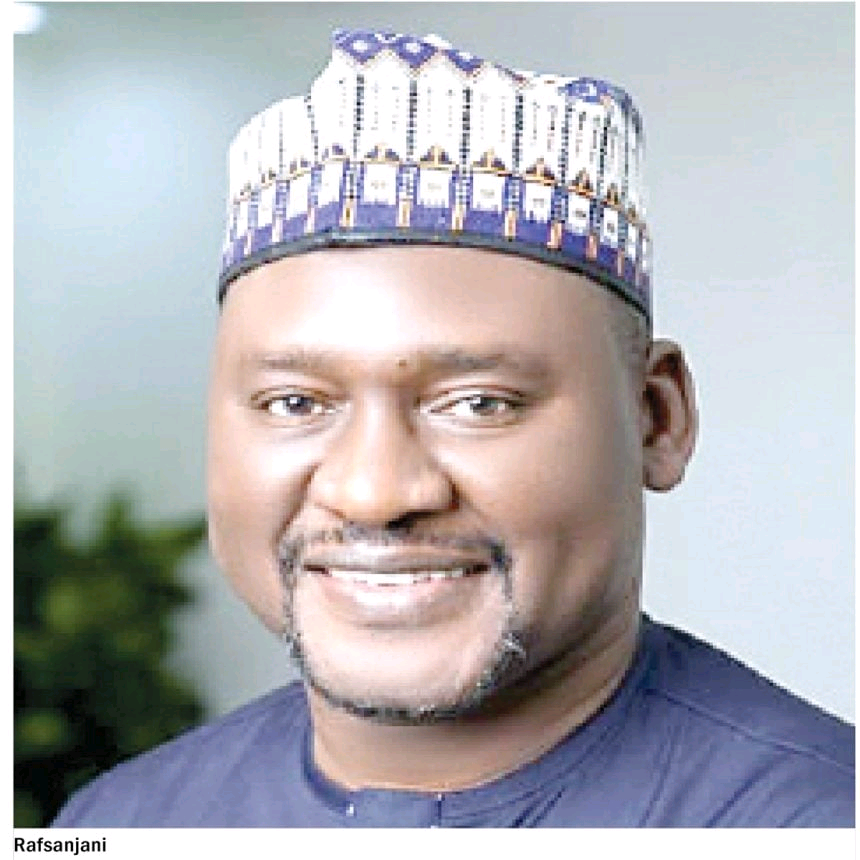

Auwal Musa Rafsanjani, Executive Director of Civil Society Legislative Advocacy Centre (CISLAC), in this interview with PHILIP IBITOYE, speaks on CISLAC’s takeaways from the August 15 governorship election in Osun State and the lessons Nigerians can learn from it against the 2027 general election.
WITHh the Osun election in the rearview, what are the things you think were done right in the election and what are the things you want to see improve going into 2027?
One of the things that they, with regard to the voters, have done right is to insist that what they want is what they voted for and stood for it. That resilience has encouraged many Nigerians to show that indeed they can focus and insist on defending their mandate. Then it is possible that they can defeat rigging. So that is one. The resilience, mobilisation and commitment to defend their mandate was one good example that we need to take forward to 2027 at all election levels. That’s number one. Number two, I think the civil society has done very well in terms of reporting violence, which we need to continue to do and improve on. Thirdly, INEC has also made some remarkable improvement compared to previous elections in terms of what they are expected to do, even though there were some few hitches. But we think INEC should improve on the success of deployment in the last election. I hope we can get all political parties to be a bit more responsible and engage in issue-based campaigns, not insults, not abuse, not attack. I think it will really help the voters to make choice, rather than just relying on ethnic or religious sentiments that have been used in public discourse and continue to bastardise governance. So for me, these are some of the things that I believe if we are able to consolidate, we can probably have a better 2027 outcome at state and national levels.
And I think also the media, especially the social media, has also helped to ensure effective mobilisation, de-escalation and for exposing possible rigging. The media has also played a crucial role. But let me also say that the civil society organisations like Amnesty International, before the election, warned politicians to stay away from mobilising violence, giving young people drugs, and that if politicians continue with that, Amnesty International will use that to galvanise public attention and possible individual sanctions by many countries that they used to go. That [intervention] also helped. For example, the senator in Osun, Francis Fadahunsi, who directed some thugs to kill Osun people, as I speak to you, has gone to a High Court to stop Amnesty International from externalising his matter because he said that it will affect his freedom to travel… he may not continue to travel abroad; he may not be able to move freely abroad because the international community will focus on him. So that kind of action that Amnesty International and other civil society organisations like Transition Monitoring Group have taken to warn politicians that used to give drugs and arms to young people to go and engage in electoral violence, has clearly shown that, yes, these people can actually be curtailed. So, we must maximise externalisation of individuals that promote violence, that promote rigging, that promote vote-buying. Vote-buying has become a major central thing that politicians do in order to get into power without accountability, with zero accountability.
Lastly, the judiciary was also warned to stay away from helping to steal people’s mandate and giving it to someone else. You could see the reckless statement from the FCT Minister, Nyesom Wike, saying that if he was in Osun, the story would have been different, and everybody knows what he was implying. So, I can tell you that the President needs to warn those people who are doing this on his behalf, on his name, because they are eventually going to jeopardise the President’s success and also his personal integrity or personal integrity in the comity of nations. If somebody like Wike uttered that statement and the President did not call him to order, then it is a problem. If the senator from Osun made that statement and the President did not call him to order, it is a problem. It is not enough just to direct or misdirect EFCC to stop. No. It’s a misplaced priority. The President is supposed to ensure that people who are promoting violence and rigging are stopped, not stopping an institution that was established to carry out its mandate. There is no time when EFCC or ICPC should do or not do their work. Based on their mandate, there is no exception for election period, and if they notice possible diversion of public funds, they must act responsibly. That is how they can satisfy the mandate given to them by the law.
So, I think it is important that the President also must prioritise his intervention. His intervention must not aid corruption; his intervention must not aid violence; his intervention must not aid rigging. This is what I think the Osun State election has brought to us. It has brought to us some positives and it has also brought us some negative dimensions.
Staying on the subject of violence you talked about, we saw heightened violence leading up to the election, and it seems that voters were not deterred, as we see with the turnout. So, is the lesson from that outcome that win-at-all-costs politics no longer has the potency it used to have, and service delivery and issues are what matter most?
Yes, this is where I say the voters must be resilient. Once they believe that a particular candidate or party has met their own expectation, they should stand by it and they insist they should not collect money to mortgage their mandate. Look, this ₦5,000, ₦10,000 that they are giving them, it’s only once in four years. So, why should you just collect ₦5,000, ₦10,000, you know, and then you continue to suffer bad governance for the next four years? I think Nigerians are beginning to get the message and, like I said, civil society with their limited resources and capacity, they have been able to reach out to a wide number of voters in Osun to discourage them from selling their conscience, selling their vote, even though the politicians had actually carried out vote-buying from both sides, both the political, the opposition party and the ruling party in the state. They were all using money, which is really sad. But, at the end of the day, still, people really were determined, notwithstanding the intimidation of the large number of governors, senators… You can imagine, the Senate President and the governors, they led delegation. The party chairman, I mean the party leadership, they were all present there. You can see the number of police officers deployed to that election, and the army. So, you could see that lack of prioritisation for safety and protection of the citizens in Nigeria. If today, you deploy 10,000 security personnel to any of the states that is suffering from insecurity, they will push out those people, and that will be lasting peace.
But because, sadly, election is more important to some people in government than securing the people. These are the things that many Nigerians are talking about; the use of security to do whatever you want to do with the election is more important than protecting lives and property of the citizens.
IReV was brought in to increase transparency and trust in election results, but the portal was stuck at 87% for about three hours on election day. What do you say to INEC as we look towards 2027?
So the call that we have made to INEC is that, look, INEC must improve because we are happy that nowadays, nobody is going to come and thumbprint one million votes. If it was before, you remember, they would go and just print one million votes and say that, this is the result. With the introduction of technology, which the politicians who want to rig fought heavily, we have been able to eliminate those bogus numbers. Now, you must be registered, you must be accredited, you must be validated, and it is only one person, one vote. So, whatever rigging you will do, you cannot input people who are not registered, people who are not accredited. You know, if there are 500 people in the polling unit, if 500 have been accredited, that is the exact number that will vote. So, technology has worked to eliminate those figures that they used to declare. Remember in those days, in a polling unit that you are supposed to have a maximum of 500 people, they would declare 10,000 votes. So now, that is not possible. So 2027, we must continue to be vigilant, and INEC must know that they have people’s full attention on what they are doing.
And, you know, for INEC chairman, Joash Amupitan, who had already been seen as a biased person who wants to come and do bias, it is also a battle for his integrity. Because if anything happens, people will say, ‘Oh, we have said it.’ So, he too, personally, has to make a choice to either survive with his integrity or to go along the line that he may not recover if he connives with the politicians to rig the election.
Lastly, we saw 43% voter turnout in Osun despite the tense pre-election environment. With INEC projecting a 100-million electorate in 2027, do you see the civic awareness pattern seen in Osun being replicated on a national scale?
You remember in 2023, Kano actually did what Osun people have done. In Kano, there were desperate attempt to snatch the mandate, but the people stood and made sure that they became very vigilant and defended the mandate they had provided. So, the example of Kano is what we have seen in Osun, and it will definitely spread to other places so that Nigerians can be happy that what they voted is what is eventually announced, not the other way around.
But more importantly, like I said, the judiciary, that some people are planning to use to collect mandates of people, of winners, need to be warned to stay away from such kind of things. Judiciary cannot be an avenue for substituting the real mandate of people. So, they need to also be worried about their reputation, both as an institution and as individual judges. They need to be worried about that, and they need to also remember that there are consequences, repercussions for such kind of criminal connivance.
