



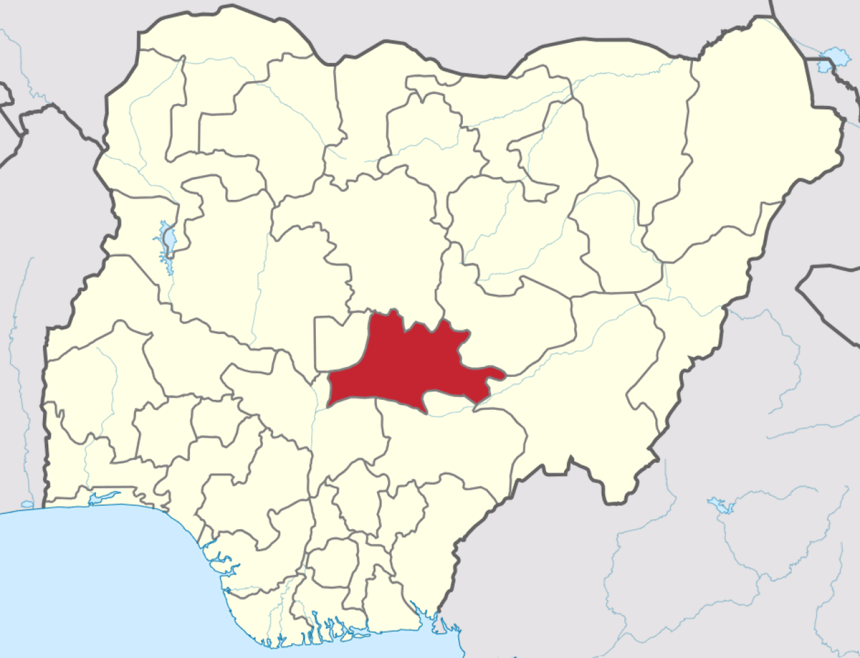

THE defection of ex-Inspector General of Police Mohammed Abubakar Adamu to the Social Democratic Party (SDP) has altered the 2027 governorship equation in Nasarawa State, setting up what may be the most competitive election since 2011.
The 2027 governorship election in Nasarawa State is shaping into a two-horse race between Senator Ahmed Aliyu Wadada of the All Progressives Congress (APC), and former Inspector General of Police (IGP) Mohammed Abubakar Adamu of the SDP.
Though five candidates are officially in the race, the contest is increasingly being defined by the two leading contenders above.
The other candidates are former House of Representatives member, Dr. David Emmanuel Ombugadu of the Peoples Democratic Party (PDP); three-time House member, Honourable Jonathan Gaza of the Labour Party (LP); and retired General Nuhu Angbazo of the African Democratic Congress (ADC).
ALSO READ: Pension assets hit N31.8trn as PenCom records N3.8trn growth in 8 months
Religion is an important factor in Nasarawa State governorship elections, and it has been used as a campaign strategy by politicians over the years to sway and galvanise supports. The religious makeup has been a source of concern; currently, the PDP, ADC, and LP candidates are Christians, while the APC and SDP standard bearers are Muslims.
The APC advantage: Incumbency and performance
Senator Wadada enters the race with the open backing of Governor Abdullahi Sule, whose two-term performance has complicated opposition messaging.
Governor Sule, who assumed office in 2019 with modest expectations, has built a record in infrastructure, solid mineral processing, workers’ welfare, and fiscal management that even his critics privately acknowledge.
In Nigerian political culture, an outgoing governor’s endorsement is rarely symbolic. In Wadada’s case, it is reinforced by his own profile as a grassroots mobiliser with name recognition across Nasarawa South, North, and West.
Wadada’s campaign will also anchor on zoning. Governor Sule has consistently defended the rotational arrangement that guarantees each senatorial zone a turn at Government House, an argument that resonates strongly in Nasarawa North and West, where the agitation for inclusion remains potent.
Why APC cannot afford complacency despite the advantage
History, however, cautions against overconfidence, particularly as it regards elections in the state. In 2011, the Congress for Progressive Change (CPC), led by Senator Umaru Tanko Al-Makura, defeated a sitting PDP government under the late Governor Aliyu Akwe Doma. The upset was driven by grassroots organising that the then-ruling party dismissed until it was too late.
Several political actors linked to that 2011 realignment are now said to be working with the Adamu camp, a development the APC is watching closely. For the APC to retain power, analysts say it must organise as if it were in opposition—consolidating the reconciliation efforts led by former APC National Chairman, Senator Abdullahi Adamu, and selling continuity to local governments.
The Adamu factor
The political atmosphere shifted after May 21, 2026, when Adamu lost the APC governorship primary to Wadada, citing irregularities, and defected to the SDP, where he emerged as the governorship candidate. Since then, his campaign slogan, “IG Gonna” has become a household chant among farmers, traders, artisans, civil servants, students, and market women.
Adamu’s appeal rests on three pillars: his national security credentials, his global contacts from years in international policing, and an aggressive stomach-infrastructure and empowerment strategy.
Together with his wife, Hajiya Rukayya Adamu, popularly known as Kwalliyar Lafia, he has toured all 13 local government areas, distributing food items, cash, farm implements, fertilizers, herbicides, and hand-driven tractors, and executing youth empowerment programs that have reached hundreds of thousands.
The result is a movement that presents itself as a rebellion against political domination. The slogan, supporters say, is a declaration that power to determine Nasarawa’s future belongs to the people. Adamu himself has framed his bid as a rescue mission.
“I’m answering the call of my people who believe I can serve and move Nasarawa forward,” he told stakeholders last year. “My administration, by the grace of God, will be inclusive, transparent, and focused on delivering tangible development across all sectors.”
APC, SDP feud, and religious sentiment may favour Ombugadu
Hon. Emmanuel David Martins Ombugadu, one of the leading contenders under the platform of the PDP, is also said to have a bright chance of clinching victory.
That is the position of some political analysts in the state who hinged their optimism on the intense and confrontational campaigns and war of words between the supporters of the APC, candidate Senator Aliyu Wadada, and that of the SDP, former Inspector-General of Police, Mohammed Adamu.
According to the analysts, the feud between the die-hard supporters of the two prominent candidates may lead to a split of votes, which will eventually give Ombugadu an added advantage at the polls.
Another factor they pointed out is Ombugadu’s personal political capacity, considering that this is about the fourth time he is contesting for the number one seat in the state. They alleged that in almost all the previous elections he did not actually lose but was rigged out.
The analysts added that Ombugadu also hails from one of the majority tribes in the state, the Eggon, and most of them are still solidly behind him despite losing elections in the past.
However, they noted that the major challenge confronting Ombugadu is the division within his party, the PDP, in the state, just as it is in other states, with reference to the Wike and Turaki factions.
Can Jonathan Gaza pull a surprise in Nasarawa?
On his part, Hon. Gaza, a three-time House of Representatives member for Keffi/Karu/Kokona in the state and LP candidate, is also one of the notable contenders for 2027.
Gaza enjoys strong name recognition in Nasarawa West, especially in Karu, the most populous LGA in the state. His three terms in the National Assembly gave him a solid grassroots structure.
He can also benefit from the Labour Party’s 2023 urban wave among youths and from the West’s agitation for power shift and the growing Christian protest vote over the APC’s alleged Muslim-Muslim dominance as stated above.
However, his biggest challenge is the split of the Christian vote. He is contesting against two other Christians, as mentioned, Emmanuel Ombugadu (PDP) and Rtd Gen. Nuhu Angbazo (ADC/Labour).
The Labour Party also has a weak structure in rural areas, unlike the APC and PDP, and Gaza lacks the large ethnic bloc Ombugadu enjoys from the Eggon nation. Gaza is credible but currently an outside favorite.
Rtd Gen. Nuhu Angbazo—Can third time be lucky?
Retired General Nuhu Angbazo of the African Democratic Congress (ADC) is also among the leading governorship contenders in the state for 2027. He has contested twice in the past but lost. Like PDP’s Emmanuel Ombugadu, he is an Eggon man from Nasarawa Eggon Local Government.
Analysts assess his chances thus: military pedigree and discipline image. As a retired general, Angbazo enjoys respect for discipline, integrity, and security experience, a strong selling point in a state facing kidnapping and farmer-herder crises. Many voters see him as a no-nonsense leader.
Nasarawa Eggon is the most politically conscious LGA in the state. Being an Eggon man gives him access to the same large voting bloc that Ombugadu banks on. Some Eggon elders still see him as a credible alternative.
ADC as new third force
With PDP in crisis (Wike vs Turaki factions) and APC/SDP locked in a bitter feud, ADC is positioning itself as a fresh alternative. The national wave of ADC as a coalition platform may give Angbazo leverage. Having contested twice, he is not new to the terrain. He understands the state’s political map and has structures, albeit weak.
Weaknesses/Challenges
The Ombugadu factor—Battle for Eggon’s soul
This is his biggest challenge. Ombugadu and Angbazo are both Eggon from Nasarawa Eggon LGA. They will be fighting for the same ethnic votes. But analysts say Ombugadu currently controls the majority of Eggon sympathy because he is seen as having been rigged out in previous elections. Angbazo will have to work extra hard to convince Eggon voters to abandon Ombugadu for him.
As said earlier, like Gaza (LP) and Ombugadu (PDP), Angbazo is a Christian. Three Christians in the race dividing the same Christian bloc is dangerous. If they all remain on the ballot, none can win. They must agree on a consensus.
ADC, though gaining attention nationally, has almost no solid structure in Nasarawa’s 13 LGAs compared to APC and PDP. He will need massive resources to build polling unit agents.
Having lost twice, some voters may label him a perennial contestant without winning strategy, unlike Ombugadu, who is seen as more.
Weak party structure
ADC, though gaining attention nationally, has almost no solid structure in Nasarawa’s 13 LGAs compared to APC and PDP. He will need massive resources to build polling unit agents.
Having lost twice, some voters may label him a perennial contestant without winning strategy, unlike Ombugadu, who is seen as more.
Funding vs Wadada and Adamu
APC’s Aliyu Wadada and SDP’s former IGP Adamu are political heavyweights with deep pockets and federal connections. Matching their financial muscle will, of course, be a huge challenge to the former army general.
Therefore, for Angbazo to win, analysts say three things must happen: He must negotiate a Christian consensus where either Ombugadu or Gaza steps down for him, or he steps down for the strongest among them.
He must win the Eggon heart—Nasarawa, Eggon, Akwanga, Kokona, Keffi, and Karu. Without 80% of Eggon’s votes, his chances collapse, and he must also exploit the APC vs. SDP war between Wadada and Adamu, which may split Muslim votes.
In conclusion, the emphasis on the potential massive sympathy votes from Christians in the state to their Christian candidates, the analysts said, is not unconnected to the sharing formula and sentiment of political positions, especially by the ruling APC in the state, where almost all the party’s candidates from state to federal seats are Muslims, a development that did not go down well with most Christians in the state, though they have not been coming out openly to say it.
The analysts are therefore anticipating a kind of “protest vote” from Christendom in the state to enable them to feel a sense of belonging.
What will decide 2027?
From all indications, the atmosphere is charged, with more choices than in 2019 and 2023. The former IGP’s biggest strength lies with youth demographics, who dominate social media, organize rallies, and make small donations to sustain the campaign. The APC’s strength remains structure, incumbency, and the Governor Sule performance argument, while Ombugadu and the two others from ADC and Labour’s chances remain bright as well considering the feud between the two aforementioned and religious aspects.
Whether the “IG Gonna” rebellion can cause a tectonic shift and end APC’s 16-year reign—from Al-Makura in 2011 to Sule’s eight years—will depend on three factors: whether the Christian vote consolidates around one of the three candidates, whether SDP can convert social media enthusiasm into polling unit structure, and whether APC can sustain its reconciliation and grassroots mobilization beyond Lafia.
As it stands, Nasarawa 2027 is no longer a coronation. It is a real contest.
